
Contemporary art publications about Ceramics
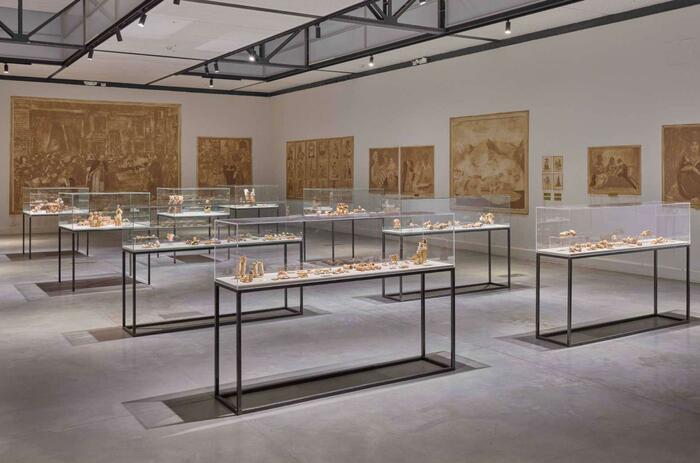
SANDRA GAMARRA HESHIKI CONNECTS CIVIC PROTEST AND COLONIAL HISTORY IN HER NEW SHOW IN LIMA
Construction of Events brings together Andean ceramics, archival appropriation, and clay mural painting at the Museo de Arte Contemporáneo de Lima, tracing an arc of over four centuries of Peruvian history.
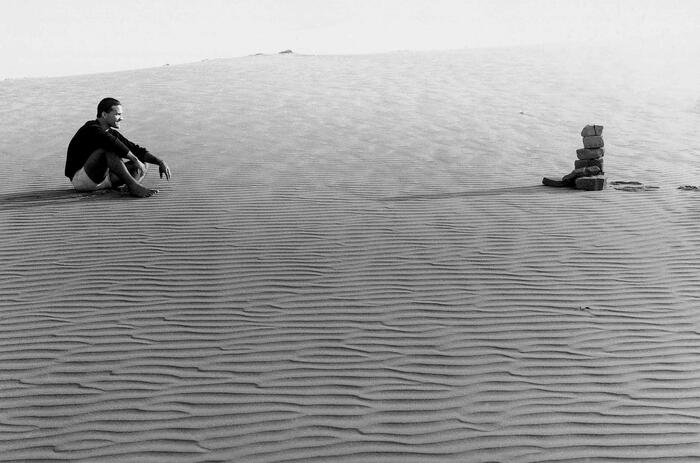
CARLOS RUNCIE TANAKA’S CERAMICS IN PINTA LIMA’S SPECIAL PROJECT
"Repeating and mastering form, shaping clay spheres, is like offering a prayer with no beginning or end in time. When I look, I hear distant music" — Carlos Runcie Tanaka (A Zen Parable and Ten Small Stories, 2007)
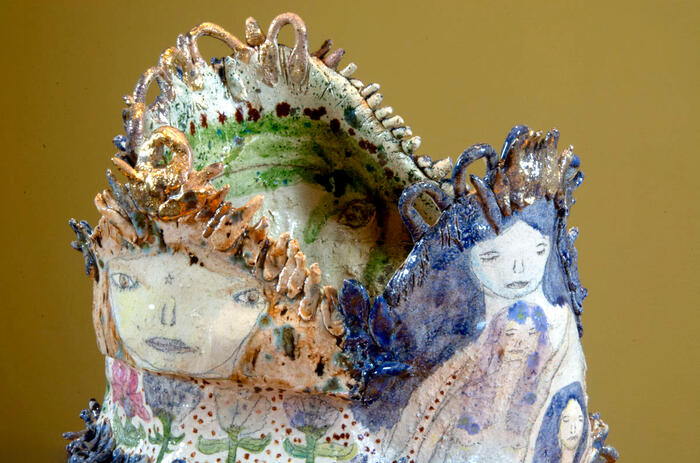
SAMUEL SARMIENTO: SPECULATING ON HISTORY
This past April 2025, Venezuelan artist Samuel Sarmiento (Maracaibo, 1987) opened his solo exhibition, Primordial Marshes: Of Waters and Goddesses, at the Claustro de San Agustín of the National University of Colombia. Curated by María Belén Sáez de Ibarra, the show features over 100 works—ceramics, watercolors, and paintings—created by Sarmiento from 2013 to the present. The exhibition presents water as a fertile ground for human stories and myths, focusing particularly on narratives from the Caribbean islands, where the artist resides.
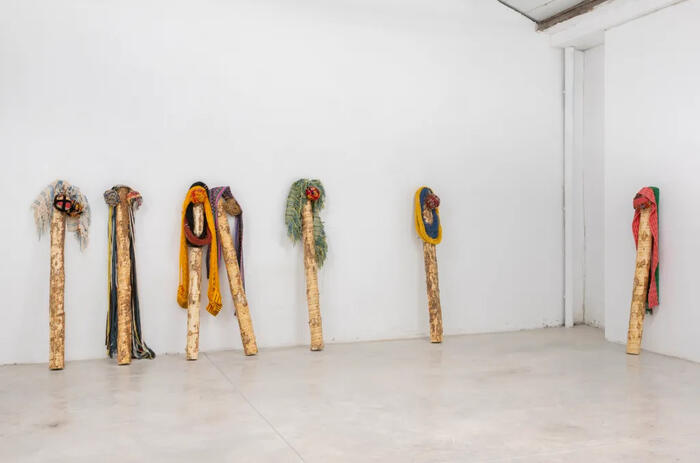
NECESSARY ANCESTRALITY IN ANTONIO PICHILLÁ
Antonio Pichillá (San Pedro de La Laguna, Guatemala) proposes a broad return to the atavistic and ancestral in his recent work, exhibited in the two venues of the Memoria gallery in Madrid under the title Abuela materna (Maternal Grandmother). This return should be understood beyond the mere construction or defense of an original identity, in order to encompass the full meaning the artist conveys through his work.
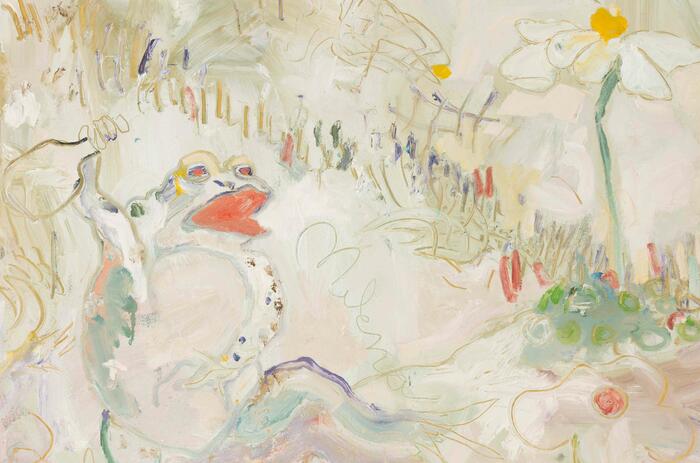
THE DAILY LIFE AND POPULAR EXPRESSION OF MILENA MÚZQUIZ IN TRAVESÍA CUATRO
Travesía Cuatro hosts at its Madrid headquarters Surf and Turf, the fifth exhibition that the gallery dedicates to Milena Múzquiz (Tijuana, Mexico, 1972), that gathers, with about thirty works, the continuity of the production that began after the aesthetic and technical change produced by the end of Los Súper Elegantes, a musical group that he shared with the Argentine Martiniano López Crozet, and which represented a platform that brought together his purest expression through voice and body, as well as with the aesthetic possibilities of costumes and image.
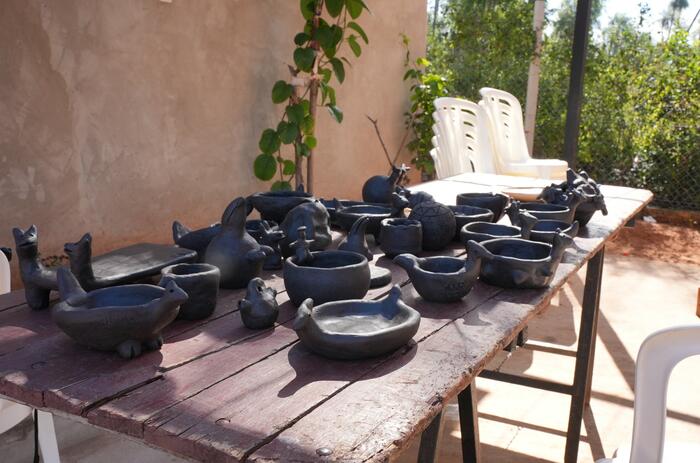
PINTA Sud | ASU CLOSED ITS THIRD EDITION AT JULIA ISÍDREZ'S WORKSHOP IN ITÁ
The third edition of Pinta Sud | ASU 2024 came to an end after a day of ceramic workshop in Itá with the renowned ceramist Julia Isídrez.