
POP BRAZIL: COLOR AND DISSENT AT THE PINACOTECA
The Pinacoteca de São Paulo, a museum under the Bureau of Culture, Economy, and Creative Industry of the State of São Paulo, presents the exhibition Pop Brazil: Avant-garde and New Figuration, 1960-70, in the Grande Galeria of the Pina Contemporânea building.
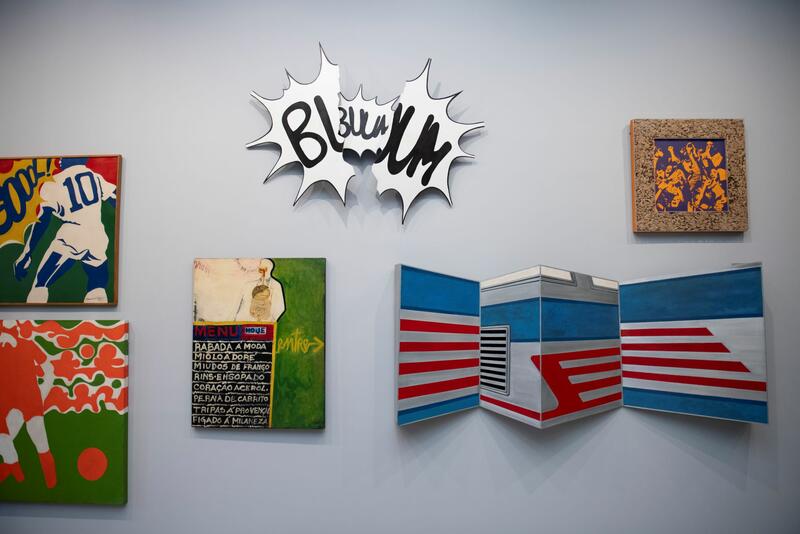
Featuring 250 works by more than 100 artists—many of them exhibited together for the first time—the show offers a broad perspective on the art of the period. Curated by Pollyana Quintella and Yuri Quevedo, the exhibition is divided into thematic sections that trace major events of the time, such as the rise of the cultural industry, the breakdown of democracy, and various social transformations. Works by Wanda Pimentel, Romanita Disconzi, Antonio Dias, among many others, are on view. Visitors will also have the opportunity to wear and interact with Hélio Oiticica’s famous parangolés.
In a context of industrialization and political upheaval—including the Cold War and Brazil’s civilmilitary dictatorship—national artistic production responded to the mass culture, driven by television, mainstream media, and advertising, with both irreverence and resistance. From the 1960s onward, a series of international figurative trends entered national artistic debates. Among them was pop art, which originated in the United Kingdom but gained prominence in the United States through celebrated artists like Andy Warhol, Roy Lichtenstein, Jasper Johns, and Robert Rauschenberg. While these artists worked on language within a developed, industrialized society marked by mass production, Brazilian artists operated in a context of underdevelopment and inequality, where they had to reckon with the trauma of a society oppressed by military rule.
-
Installation view. Pop Brazil: Avant-garde and New Figuration, 1960-70. (Pinacoteca de São Paulo)
-
Installation view. Pop Brazil: Avant-garde and New Figuration, 1960-70. (Pinacoteca de São Paulo)
-
Installation view. Pop Brazil: Avant-garde and New Figuration, 1960-70. (Pinacoteca de São Paulo)
“The exhibition explores a moment in Brazilian history that still resonates in our daily lives. Looking at this production is key to understand the emergence of contemporary art in Brazil, as well as the foundational issues in many debates we face today. And, through the gathering of these works, we can grasp the collective strength of a generation of artists who worked to denounce, protest, and dream of a new society,” say the curators.
The artists’ interest in the street—driven by a desire to occupy more diverse and less institutionalized spaces—marked a series of events in the late 1960s and early 1970s. Among them was the Happening das Bandeiras [Flag Happening], held in 1968 at General Osório Square in Ipanema, Rio de Janeiro. It brought together artists such as Nelson Leirner, Flávio Motta, Hélio Oiticica, Carmela Gross, and Anna Maria Maiolino. On that occasion, they displayed silkscreened flags in the square, promoting a collective occupation of public space, in pursuit of broader and more democratic access to the visual arts. The set of original flags opens the exhibition in the Grande Galeria.
Subsequent sections present works that reflect Brazil’s emerging cultural industry, showing stars of Brazilian popular music—whose fame grew thanks to television festivals—amid the fever of the space race, which turned astronauts into “pop icons” and broadcast to the world the historical milestone that was the humankind’s landing to the Moon.
Prominent names from the period are showcased, like Nelson Leirner with his altar to the “king” Roberto Carlos, in the work Adoração [Adoration] (1966); Claudia Andujar, with a photograph of Chico Buarque taken in 1968; Flávio Império, who portrayed Caetano Veloso in Lua de São Jorge (1976); the popular artist Waldomiro de Deus, with his characteristic rockets; and Claudio Tozzi, with works such as Bob Dylan (1969) and Guevara (1967), in addition to his astronauts that helped define the iconography of Brazilian pop art.
Pop Brazil: Avant-garde and New Figuration, 1960-70 will be on display until October 5, 2025, atPina Contemporary building (Grand Gallery), Avenida Tiradentes, 273, Luz, São Paulo (Brazil).
Related Topics
May interest you
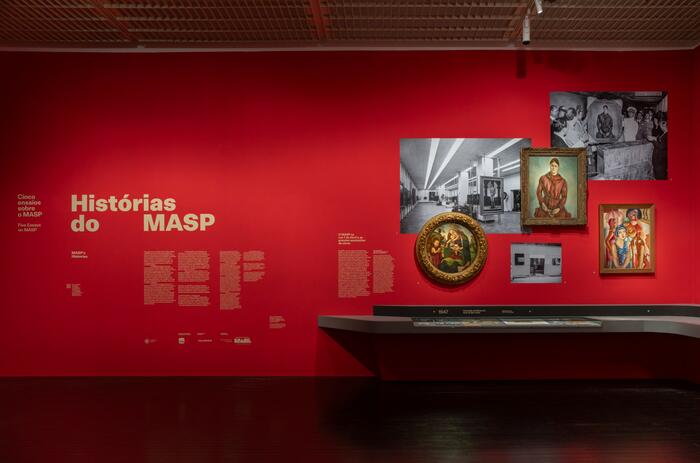
FIVE READINGS OF MASP: BETWEEN HISTORY AND THE PRESENT
Histories of MASP, Renoir, Geometries, Arts from Africa, and Isaac Julien: Lina Bo Bardi – A Marvellous Entanglement are part of Five Essays on MASP, a series of exhibitions based on the museum’s collection that inaugurate the new Pietro Maria Bardi Building.

BIENALSUR CURATES LATIN AMERICAN VIDEO EXHIBITION AT THE REINA SOFÍA
The Reina Sofía Museum, in collaboration with BIENALSUR, presents the exhibition Resistencia. Una selección de video sudamericano (Resistance: A Selection of South American Video). Curated by Argentine art historian Diana Wechsler, artistic director of BIENALSUR, the exhibition offers two complementary ways to engage with the works, both situated around the museum’s cinema hall.

WITH AN ACRE: ALTERNATIVE ARCHITECTURES IN THE HEART OF BRAZIL’S COFFEE REGION
The final chapter of the Groundwork series follows Carla Juaçaba as she develops a museum in collaboration with the collective Flor de Café—a gesture of territorial solidarity in the face of extractivism, urbanization, and climate change.
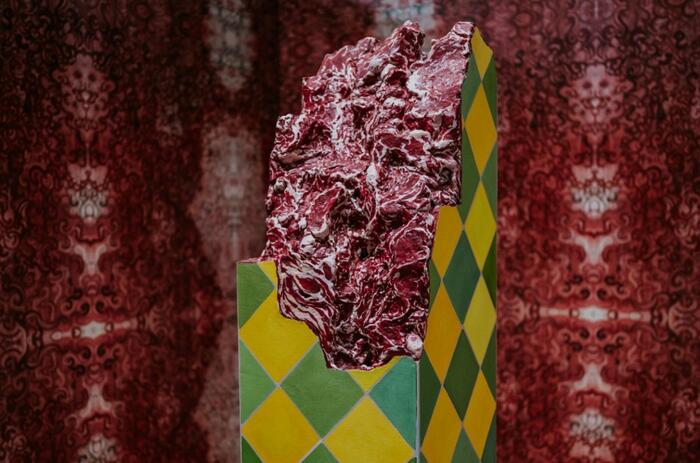
VAREJÃO AND REGO, DIALOGUES AT GULBENKIAN
The Gulbenkian Modern Art Center in Lisbon presents Entre os vossos dentes (Between Your Teeth), an exhibition showcasing 80 works by Adriana Varejão (Rio de Janeiro, Brazil, 1964) and Paula Rego (Lisbon, Portugal, 1935 – London, United Kingdom, 2022), reflecting the production, themes, and interpretations of these two artists from different generations.
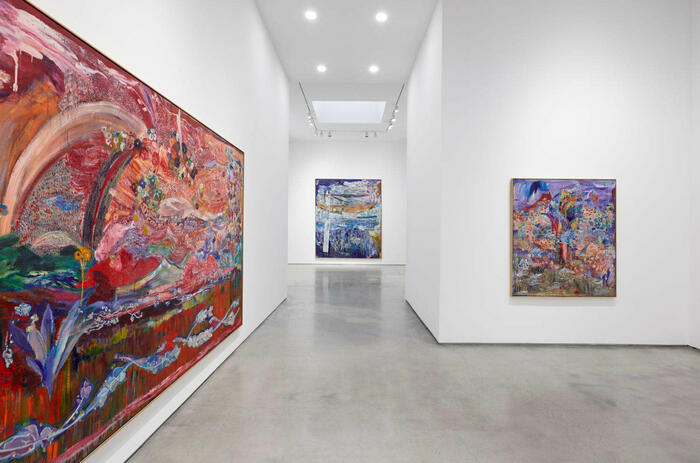
BRAZILIAN GALLERIES GROW AT U.S FAIRS, BUT EXPORTING ART REMAINS A CHALLENGE
The presence of Brazilian art galleries at major U.S. art fairs — such as Art Basel Miami Beach and Frieze New York — is both frequent and well-established. Galleries like Nara Roesler, Simões de Assis, Mendes Wood DM, and Luisa Strina have become familiar names on the circuit, maintaining a consistent presence year after year.
VERDE-DISTÂNCIA: THE 2ND BIENAL DAS AMAZÔNIAS TRACES CONSTELLATIONS THROUGH PAN-AMAZONIAN ART
This edition unfolds in Belém as a poetic and political reflection on Amazonian and Caribbean territories. More than 80 artists explore the notions of dream, memory, and accent as forces that reconfigure geography, time, and resistance.

SP-ARTE ROTAS 2025 IN SÃO PAULO: A FAIR OF MULTIPLE IDENTITIES
The fair brings together galleries from 12 Brazilian states and expands its reach to include exhibitors from Argentina and the Peruvian Amazon.