
By
Álvaro De Benito
The 24th Cerveira International Art Biennial consolidates its commitment to contemporary art as a site of critical inquiry through a significant Latin American presence that interrogates territory, memory, and identity from decolonial and transnational perspectives.
The Cerveira International Art Biennial reaffirms its position as one of Portugal's foremost platforms for contemporary artistic practice. Under the artistic direction of Mafalda Santos, the twenty-fourth edition takes Borderless Territories as its curatorial premise, inviting a critical reflection on the tensions that shape the contemporary world. Rather than approaching borders as fixed geopolitical demarcations, the Biennial frames them as contested cultural, social, and epistemic constructs, foregrounding artistic practices that challenge dominant narratives and destabilise hegemonic modes of representation.
Accordingly, this edition shifts attention away from territorial delimitations towards more nuanced understandings of belonging, memory, displacement, and spatial imaginaries. The curatorial framework embraces an expanded field of artistic media, bringing together installation, video, performance, spatial practices, and hybrid works that engage digital technologies and experimental methodologies. In doing so, the Biennial positions itself as a discursive platform in which heterogeneous artistic practices interrogate established distinctions between centre and periphery while proposing alternative configurations of cultural production.
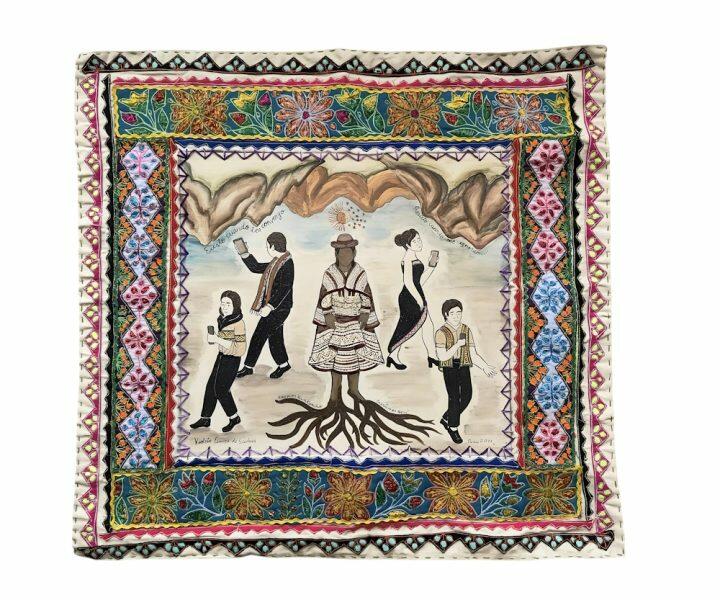
Latin American participation occupies a particularly significant place within the exhibition. Alongside a substantial representation of Brazilian artists—including Aléxia Delorme, Carlos Nunes, Edileuza Penha de Souza, Fabiano Fernandes, Maura Grimaldi, Manoel Quitério, Renan Marcondes, Thiago Rocha Pitta, and Efrain Almeida—the Biennial features works by the Ecuadorian artist Isabel Llaguno A., the Spanish-Venezuelan artist Valentina Alvarado Matos, and the Peruvian artist Violeta Quispe de Sarhua.
Taken together, these practices articulate territory as a historical, affective, and political construct rather than a merely geographical condition. Their works examine migration, the negotiation of cultural inheritance, collective memory, and forms of resistance, while engaging broader debates surrounding decoloniality, mobility, and the politics of remembrance. Through these perspectives, the Latin American contribution significantly reinforces the Biennial's critical agenda, expanding the interpretative frameworks through which contemporary social transformations are understood.
This institutional commitment is further reflected in the acquisition of three works: Dobrar mapas, erguer cantos (2026) by Maura Grimaldi (São Paulo, Brazil, 1988); cada gesto (2024) by Valentina Alvarado Matos (Maracaibo, Venezuela, 1986); and KAYPIN CHACHKANKI (I EXIST HERE) (2025) by Violeta Quispe de Sarhua (Sarhua, Peru, 1959). These acquisitions attest to the jury's interest in artistic practices that mobilise cartography as an affective and performative strategy while affirming Indigenous identity as a form of epistemic and cultural resistance.
The 24th Cerveira International Art Biennial runs until 30 December 2026 across the Fórum Cultural de Cerveira, the Cerveira Biennial Museum, the Convent of São Paio, and other public and cultural venues throughout the municipality of Vila Nova de Cerveira, Portugal.
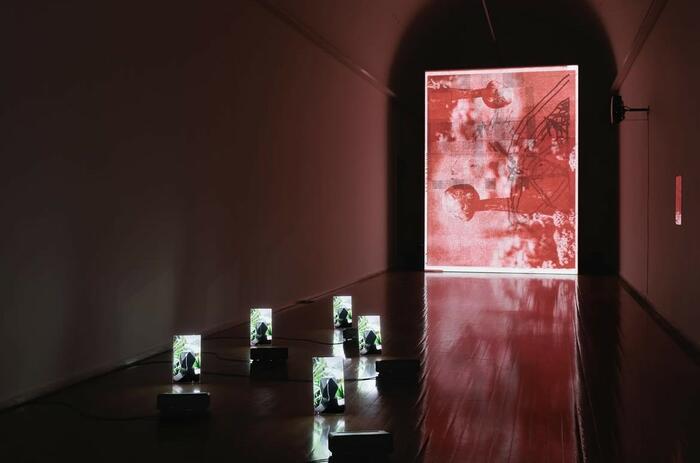
The Portuguese artist concludes his exhibition trilogy at MACE with a solo exhibition in which children's drawings, cognitive development and representation intersect with references drawn from art, science and philosophy.
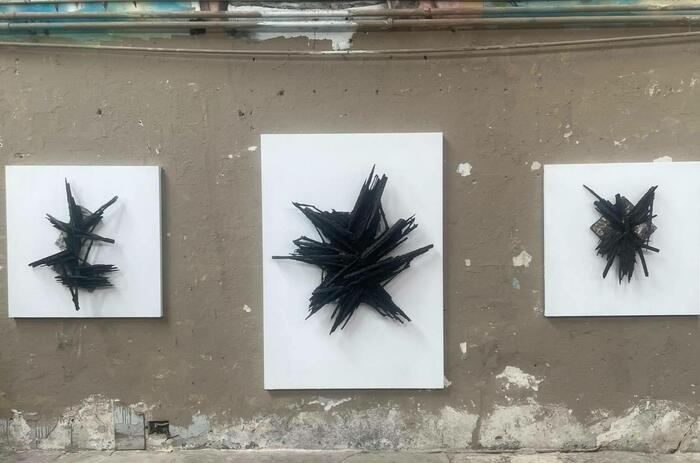
A Madrid exhibition brings together Trini Energici's material research, in which her work explores the transformation of materials as a metaphor for memory, territory, and change.
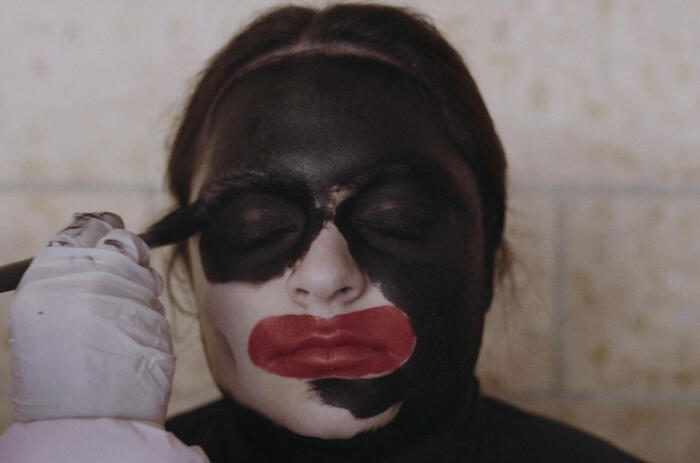
The second edition of Contemporary Visions at the Salamanca museum revisits colonial memory and its impact on the present through the recent work of the Spanish-Cuban artist.
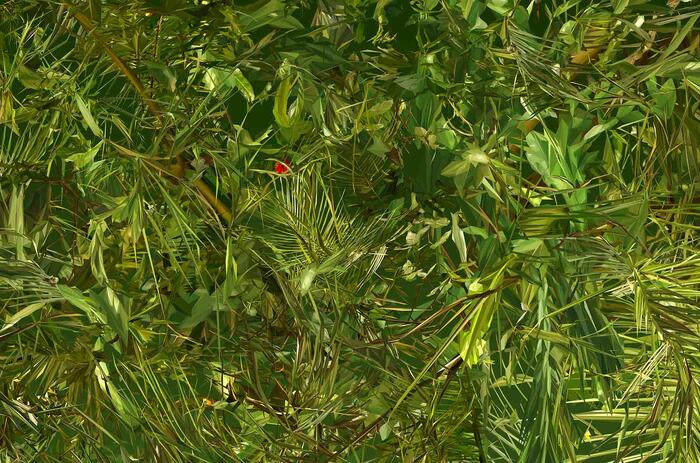
In his exhibition in Pollença, the Brazilian artist proposes an immersive experience that moves beyond contemplation, inviting viewers to reflect on nature as an ongoing process of which human beings form an integral part.