
FINAL WEEKS TO VISIT FERNANDO SAMPIETRO’S CRITICAL RETROSPECTIVE AT MUSEO CABAÑAS
The exhibition Antenas al vacío revisits the work of the Mexican artist and expands into a book that addresses contemporary art, experimental cinema, and Latin American visual thought.
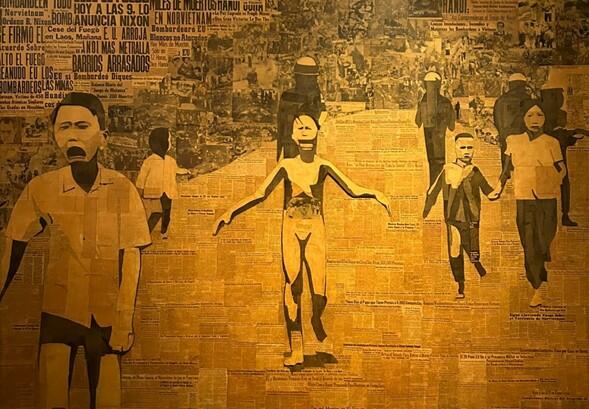
For decades, the work of Fernando Sampietro (1951–1984) remained almost invisible, safeguarded within the family sphere and shaped by a fragmented memory. Today, that silent archive is activated on two complementary fronts: the exhibition Antenas al vacío, presented at Museo Cabañas, and the book Fernando Sampietro. A True Duchampian Who Called Himself Marcelo del Campo, a publication that for the first time brings together nearly the entirety of his artistic and literary production.
Open to the public through February 22, 2026, Antenas al vacío offers a critical reassessment of Sampietro’s brief yet intense career. He is considered part of the last generation shaped by the cultural influence of Spanish Republican exile in Mexico, moving from the family path of textile engineering toward a self-taught, avant-garde artistic practice that he described as “a cry into the void.”
A multifaceted artist, Sampietro worked across painting, poetry, film, and collage. He produced his body of work over little more than a decade, during which he reinterpreted Warhol, Picasso, the Rolling Stones, and Duchamp himself, among others.
Curated by Cuauhtémoc Medina and Ana Sampietro, the exhibition brings together different moments of his practice, ranging from exercises in ironic appropriation and paintings of antennas and water tanks in Mexico City to a significant corpus of Super 8 films, including animation, fiction, and experimental recordings made in the 1970s.
Originally presented at the Museo Universitario del Chopo in 2024, the exhibition sparked renewed interest in reconsidering Sampietro’s place within Mexican contemporary art. Its arrival at Museo Cabañas deepens this critical effort, bringing audiences closer to a body of work marked by sensitivity, experimentation, and an aesthetic that engages with pop, conceptualism, and the post-photographic.
This museographic journey finds a natural echo and expansion in the large-format publication, which functions both as an archive and as a critical essay.
The volume brings together, for the first time, nearly the entirety of Sampietro’s artistic and literary output, produced over little more than a decade. It pays tribute to a true Duchampian who, in reinterpreting Warhol, Picasso, the Rolling Stones, Duchamp himself, and many others, opened an original path within national artistic production that went on to influence subsequent generations.
Fernando Sampietro’s eccentric creativity bears a strong sense of alienation and displacement in relation to the culture of a historical moment dominated by the divide between liberals and revolutionaries—or, if one prefers, between (neo-)liberals and (neo-)revolutionaries—in the closing decades of the twentieth century in Latin America. In his case, however, this condition was also a pursuit in itself, incomplete as it may have been, and not solely a result of his premature death.
Antenas al vacío can be visited in Galleries 1 through 5 of the Museo Cabañas’ North Circuit through February 22, 2026. The book Fernando Sampietro. A True Duchampian Who Called Himself Marcelo del Campo is available in an author’s edition at bookstores.
Related Topics
May interest you
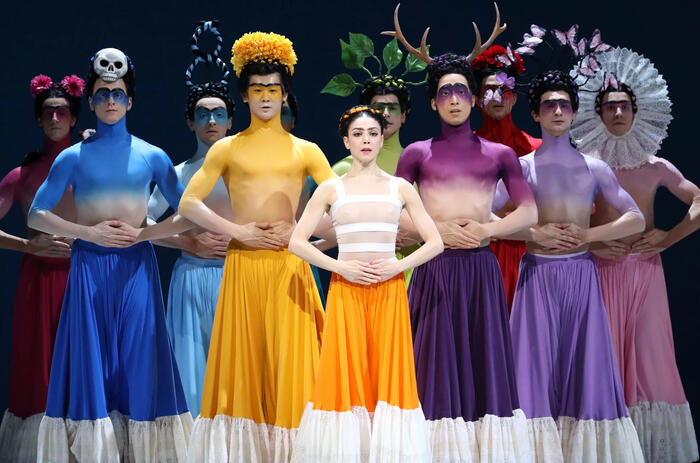
NETHERLANDS-MEXICO ARTISTIC AND CULTURAL COLLABORATION FUND: ENLACE CREATIVO 2026
The Enlace Creativo 2026 call for proposals is now open. This fund is intended to support collaborative projects that strengthen cultural and creative exchange between the two countries. Application deadline: January 30, 2026.
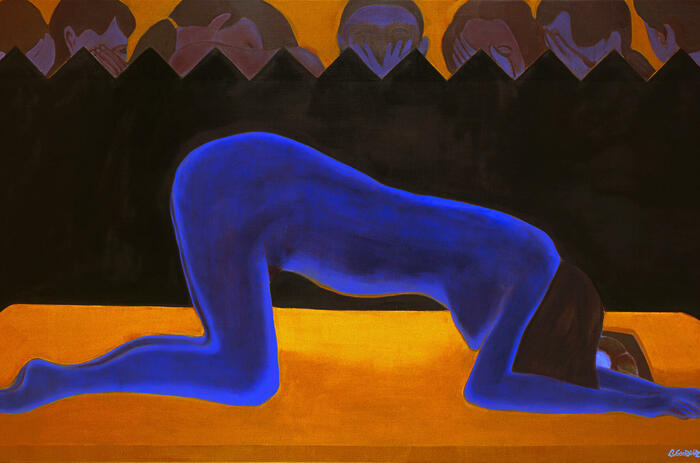
EIGHT KEY LATIN AMERICAN ART EXHIBITIONS TO SEE ACROSS EUROPE IN 2026
From historical retrospectives to immersive installations and new commissions, museums across the continent will host the work of seminal artists.
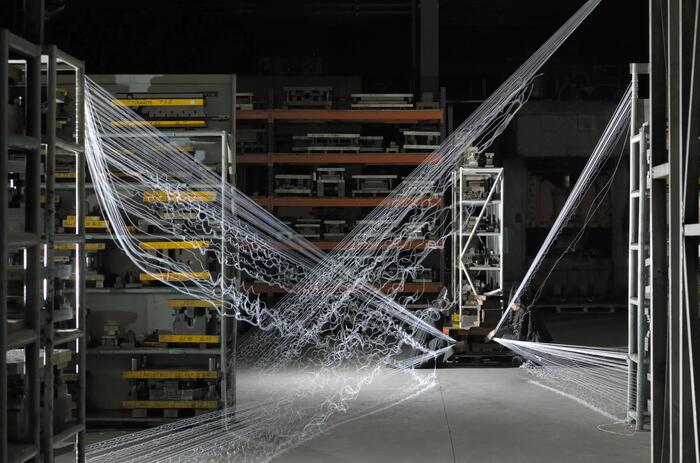
WEAVING THE INVISIBLE: MORENO AND ENRÍQUEZ IN DIALOGUE AT LA TERCERA NAVE
La Tercera Nave brings together the practices of Linarejos Moreno and Vanessa Enríquez in a dialogue centered on the material and symbolic remnants of memory. Through the concepts of textiles and weaving, both artists address fragmentation from industrial and technological perspectives.