By
María Sancho-Arroyo
The end of 2024 and the beginning of 2025 were marked by palpable euphoria in the art market, particularly in Miami during December’s fair week. The recent outcome of the U.S. elections and the return of Donald Trump to the presidency initially generated optimism among collectors and art professionals. It was expected that the new administration would boost liquidity in the U.S. market, with positive effects on the global art market.
However, by the end of the first quarter, the outlook had become far more uncertain. One of the most concerning factors has been the re-emergence of the debate over tariffs—a topic that had already caused unease during Trump’s first term. This time, the issue lies not only in the tariffs themselves but in the lack of clarity regarding their scope, duration, and implementation. In February, for example, a 25% tariff on imports from Mexico was announced just days before the start of Zona Maco, only to be withdrawn and later reinstated. Currently, new tariffs have been imposed, although it is still unclear how they will directly impact the art sector. While painting and drawing may be exempt, steel sculpture could be affected due to its connection with the heavy industry.
The issue goes beyond the category of the artwork—its geographic origin also plays a role. During Trump’s first administration, a 25% tariff was applied to all goods manufactured in China—not only recently produced items, but also historic objects. For example, a porcelain vase made in China 400 years ago, even if it has spent the last hundred years in a private collection in France and has no recent link to China, could still be subject to the tariff. This level of uncertainty directly affects all markets, including the art market. And since the United States accounts for approximately half of the global market, any shift there has international repercussions.
As for the secondary market, the results of the February auctions in London confirmed a trend that had already been emerging: high-value lots—the so-called “trophy” works—are the most affected. In a context of volatility, only sellers who are compelled to sell (due to estate settlements, debt, or divorce) are willing to consign their works. Others prefer to wait for more favorable conditions. Therefore, the issue is not a lack of demand, but a shortage of supply. That said, demand has also shifted: buyers are still active, but they are more cautious, selective, and strategic. They want quality, but at a well-calibrated price. They know the market has cooled and are looking for opportunities. This behavior is especially noticeable in the high-end segment (above $5 million), whereas the mid- and lower-tier segments have remained relatively stable in volume, though prices have decreased, particularly at auction.
In galleries, price corrections are more difficult to measure, but greater restraint is also evident. This correction has been even more noticeable in the so-called “ultra-contemporary” segment—that is, artists born from 1975 onwards. In this category, the adjustment has been much more pronounced: the bubble has burst, and prices now sit between 30% and 70% below the peak reached between 2020 and 2022. As a result, this segment offers attractive opportunities for those willing to buy. However, the risk remains high, as many of these artists do not yet have an established trajectory. Only a small group has managed to hold their ground: those with strong critical recognition, institutional representation, and, in many cases, the backing of major galleries. In reality, only artists who combine all these elements have weathered the correction. What matters now is no longer short-lived trends, but the construction of a long-term narrative.
March was marked by Hong Kong’s art week, with Art Basel and, for the first time, all three major auction houses—Sotheby’s, Christie’s, and Phillips—holding simultaneous sales. This was made possible by the opening of their own spaces, allowing them to organize exhibitions and auctions without relying on the Convention Center. The results from this week are key to taking the pulse of the Asian market. Although the information coming out of Art Basel Hong Kong is always partial—filtered by galleries who highlight only what suits them—a trend is noticeable: major international galleries report strong sales, many of which were finalized or reserved in advance. This raises a legitimate question: to what extent do these results reflect the actual market, rather than a marketing strategy repeated fair after fair?
The fact that artworks are virtually sold before the fair even opens reinforces the idea that the fair is increasingly functioning as a platform for visibility and positioning, rather than as a space for transactions. In contrast, smaller galleries have faced greater difficulties closing sales, although the price range between $50,000 and $100,000 has shown slightly more activity. As Wendy Xu, director of White Cube Asia, put it: “Before, they would buy two, three, even four works. Now they just want one—and they want to make sure it’s the best one.” In the auction sphere, results in Hong Kong mirrored those in London: slimmer catalogs, a scarcity of trophy works, and a marked caution from sellers. Buyers, though present, focused on safe bets—works by blue-chip artists with strong market demand. This translated into high sell-through rates—over 90%—but in the context of a general decline in overall sales volume, which fell to its lowest level in five years. Nevertheless, the price adjustment to more realistic levels allowed for a slightly better-than-expected performance and early signs of recovery, with interest spread across various segments of the market—though even the most affluent collectors continue to approach the season with caution.
Another key fair in March was TEFAF Maastricht, dedicated to works ranging from antiquity to the present day, and held just a few days before Hong Kong’s art week. This year, the atmosphere was notably positive, with many galleries reporting strong sales. Dealers attributed this momentum to a general price correction that created more accessible entry points for buyers—particularly around the $100,000 range—while sales at the higher end, such as those above $2 million, remained more challenging. There was also a renewed interest in Old Master and classical works—such as European paintings from the 16th to 19th centuries, religious sculpture, and historical furniture—following years of dominance by modern and contemporary art. Institutional presence was another key factor, with over 500 museums invited from around the world, helping to reinforce the fair’s positioning and visibility.
In short, the first quarter of 2025 has revealed the gap between expectations and reality, but also the market’s ability to respond quickly. Price adjustments to levels more aligned with current demand have been key to maintaining momentum in certain segments. Looking ahead, it will be essential to monitor whether this trend contributes to restoring confidence and enables the market to adapt to an increasingly uncertain economic and political landscape.
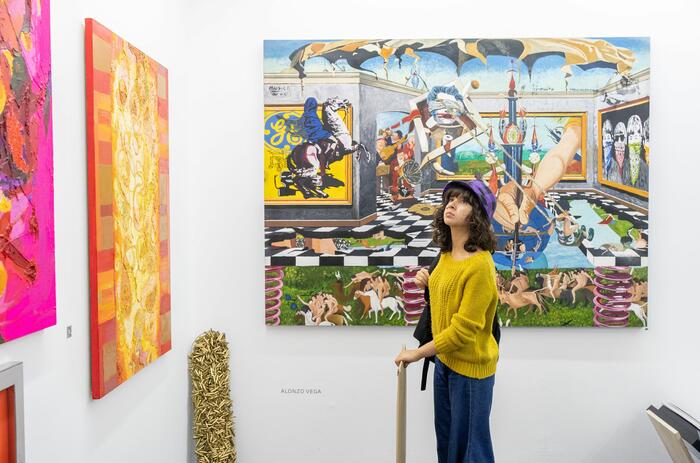
Peruvian contemporary art is experiencing a vibrant moment. Over the past decade, its art ecosystem has begun to consolidate, with a growing local collector base, a more professional gallery scene, and an increasing number of artists gaining international visibility. However, it remains an early stage, with a small and fragile market that requires stronger structures to support its development. Unlike other countries in the region, Peru lacks strong institutional support for contemporary art.

Mexico has emerged as a significant contemporary art hub on the international stage. Since the inception of Zona Maco, Mexico City has become a key destination for cultural pilgrims, marking the start of the global art fair calendar.
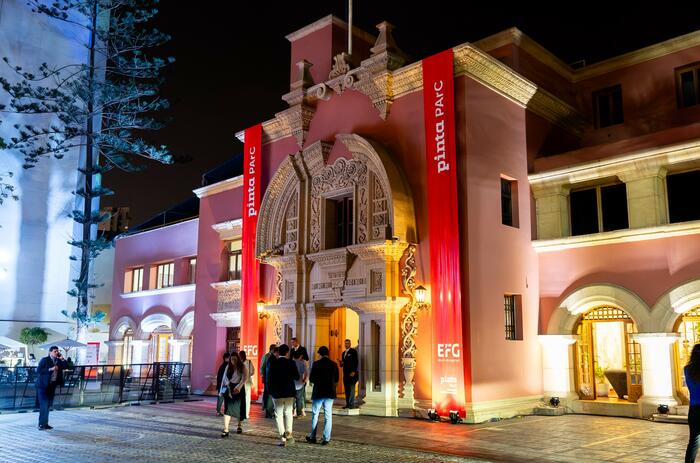
Pinta Lima is the most important contemporary art fair in Peru, presenting in its 12th edition a solid program that celebrates the diversity of the Latin American artistic and cultural scene. Located at Casa Prado in Miraflores, Lima, the fair is an essential event where a network of artists, galleries, curators, and collectors from the region connect with the international scene.
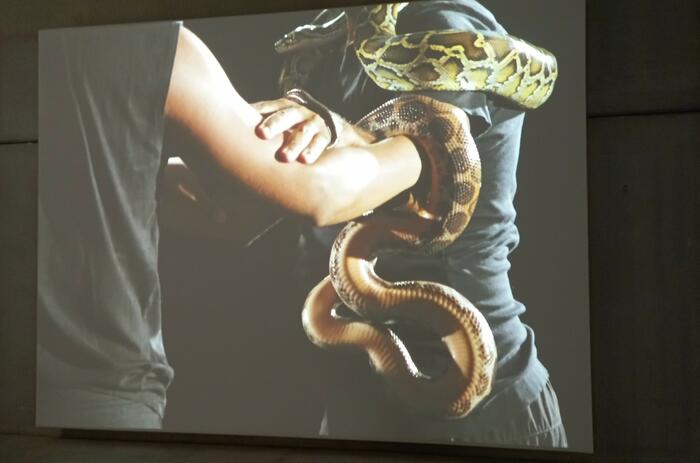
La Commanderie de Peyrassol presents a monographic exhibition by Jonathas de Andrade - Maceió, Brazil, resident in Recife -, within the framework of the cultural season, held this year under the aegis of the Ministries of Foreign Affairs and Culture of Brazil and France. Philippe Austruy - owner of the site and collector of contemporary art -, echoing the desire for a “multidisciplinary, innovative and committed” season and the reflections and contemporary issues defined as thematic axes, in particular, climate and ecological transition, invited the artist to design an exhibition in this vast wine-growing domain in the south of France.
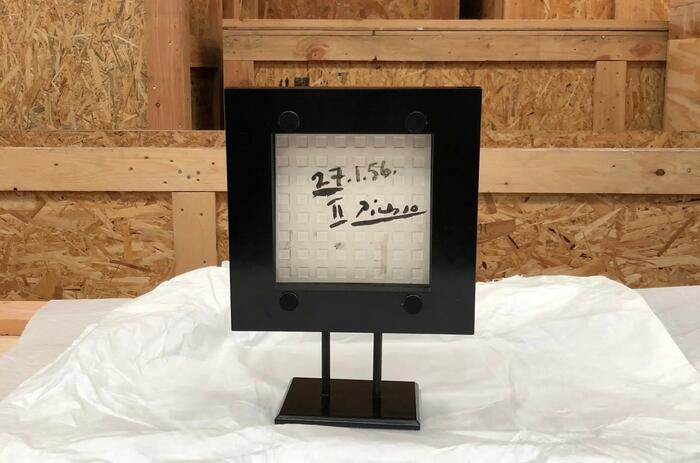
Interview with Edouard Gouin, Co-founder of Convelio.