

By
Álvaro De Benito
In conversation with the Co-Curator of the upcoming 14th Liverpool Biennial about its curatorial framework, which, under the title The Age of Magical Thinking, will explore the power of imagination to create alternative worlds and rethink the role of cultural institutions within their communities.
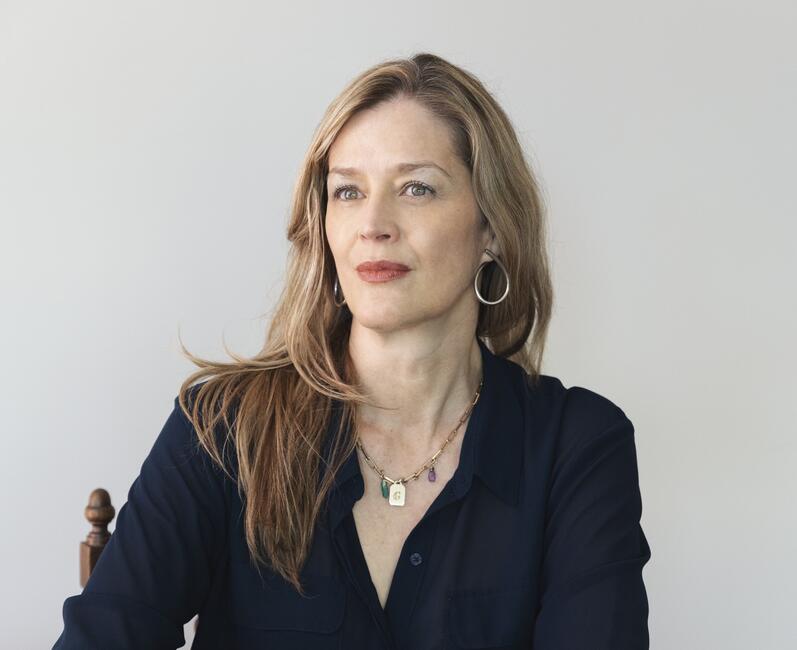
Lucía Sanromán (Guadalajara, Mexico, 1971) will co-curate the 14th edition of Liverpool Biennial alongside Aimee Harrison. Her involvement in the project brings an international perspective into dialogue with Harrison’s in-depth knowledge of the city and its communities. Building on Jean Piaget’s concept of the “The Age of Magical Thinking”, the theme of the upcoming edition revolves around imagination and magical thinking as extraordinary forces capable of creating new and alternative worlds.
At the heart of their proposal is an understanding of childhood and youth as territories of enquiry from which to consider a present characterized by transformation and change, rather than as a thematic subject in themselves. We speak with Sanromán about the possibilities of conceiving a biennial through collaboration, attentive listening and process, as well as the challenge of rethinking the role of cultural institutions within the communities in which they operate, offering a closer look at the curatorial framework of this edition.
Álvaro de Benito (Á.B.): This edition of Liverpool Biennial has adopted a collaborative curatorial model that brings together a perspective deeply rooted in the city, represented by Aimee Harrison, and an international perspective, represented by yourself. What does your position as a guest curator contribute to the project?
Lucía Sanromán (L.S.): Aimee has worked at Liverpool Biennial for many years as Curator of Learning and has exceptional experience in developing projects with children and young people in Liverpool. She knows the city intimately and embodies that local perspective, closely connected to its communities and to the relationships the Biennial has built over many years. I arrive as an international voice, but also with a practice deeply committed to socially engaged and participatory forms of artistic production. That was precisely what made the project compelling: it was never about bringing an external perspective to Liverpool, but about placing two distinct experiences in dialogue to broaden the ways in which the Biennial might be conceived.
Á.B.: In fact, that combination has always been, more or less explicitly, part of Liverpool Biennial's identity: an international initiative that understands place as a site of encounter between different contexts.
L.S.: Liverpool Biennial has long interested me because it approaches the city as a site of artistic enquiry and because it has developed significant socially engaged art projects. My role is to introduce different questions, grounded in another set of experiences and with enough critical distance to challenge certain assumptions and open new possibilities of interpretation around this context, all through the lens of childhood and youth. Rather than offering an external viewpoint, the aim is to construct a project in which different ways of understanding the present can enter into the dialogue.
Á.B.: This edition of Liverpool Biennial places particular emphasis on revaluing the perspectives and experiences of childhood and youth. In your introductory curatorial text, you describe childhood and youth not as themes but as ways of imagining the world. How does that idea translate into a curatorial methodology?
L.S.: From the outset, what interested me was ensuring that the Biennial would not become an exhibition that thematizes childhood or youth, which would have been a rather obvious approach. Instead, Aimee and I have proposed understanding them as territories of enquiry. This shift in perspective changes the way one thinks about the project. If you speak of youth, you tend to think of a social group or a demographic category. If you conceive of it as a territory, different questions begin to emerge. It becomes a space in constant transformation that we may inhabit and move through, beyond an observable phenomenon, but as a context to be experienced, where identity is never fixed and where change is understood as a natural condition of existence. In a sense, transition and change are the most fundamental characteristics to the evolution from childhood to adulthood—as opposed to when our identity is set. With this in mind, we can explore this territory of transition as a lens through which to analyze our very changeable present.
Á.B.: I imagine that such an approach also disrupts certain predetermined frameworks you might otherwise have brought to the exhibition as a curator.
L.S.: Absolutely. One of my principal concerns is that childhood and youth constitute some of the most vulnerable stages of life in terms of rights. When you are a child or an adolescent, many of your rights depend upon other people; and as soon as you begin to acquire autonomy, you risk becoming a figure regarded with suspicion by the social order. Migration, war, and forced displacement mean that increasing numbers of minors are moving across the world without the protection of their families, making the situation even more complex and demanding an urgent reflection on human rights. But also, the project asks us to think carefully about consent and about representation, issues that are particularly important in relation to the circulation of images of individuals online, for example. Additionally, in relation to socially engaged practice, we can be bolder about how to create ethical frameworks for participation where neither the arts organization, the artist or the curators are “speaking for” or “on behalf” of youth. This last framework is particularly challenging, given the previous elements I noted.
Á.B.: Were there any disagreements about how to translate the notion of childhood as a territory of enquiry into the exhibition? How does that reflection shape the Biennial as a whole?
L.S.: No disagreements at all. On the contrary, we have been able to find specific areas of inquiry that shape the artist and project selection. There are artists who create or work with models of alternative world-making and socialization through play, and digital platforms that explore the individual and community and create alternative spaces for agency. Artists focusing on childhood, including their own, during moments of transition (childhood – adolescence – young adulthood), or that address various models of kinship and community (indigenous – non-indigenous). Those who create socially engaged and participatory works with young people to amplify children’s voices, challenging traditional hierarchies in artmaking and acknowledging children and youth as creative agents who shape their own experience. And finally, children and youth’s representation, legal self-determination and rights come into focus and suggest this project is part of a broader civic movement. This area highlights the vulnerabilities associated with queerness, mental health, migration, criminalization, and conflict over the use of public space.
Á.B.: What has this collaboration brought to the way you have approached the Biennial?
Aimee has skills that I don’t and vice versa, so in this sense it has been a very fruitful collaboration. She has a special skill to make people feel immediately heard and seen, rather than trying to impose in any way a top-heavy curatorial vision. Also, other more subtle aspects to do with being hospitable, as a value, makes itself felt in the way she addresses conversation. I know, for example, that she knows the context of Liverpool and the large and small things that make that context unique from others, and how the character of the people of the city is very much about being proud of a certain working-class identity that is sophisticated and knowing. I completely trust that she puts fair engagement first, even before institutional priorities, which is truly rare.
Á.B.: Liverpool Biennial has a long tradition of commissioning site-specific projects and working collaboratively with local communities. How does that legacy inform the way communities are engaged and the projects developed for this edition?
L.S.: Liverpool Biennial was founded with the aim of bringing international contemporary art to a city undergoing profound transformation. Throughout its history, it has supported important socially engaged projects, although these were conceived primarily for the communities in which they took place, rather than for the international art world. Today we are equally uninterested in turning Liverpool's young people into objects of representation. What we seek instead is to provide tools through which those communities can develop forms of self-representation that are less mediated by cultural institutions. This represents a very significant methodological shift that will have various manifestations, including existing work of socially engaged artists in the region, as well as a project that will engage youth in Liverpool to think about the kind of public space they need today in the city.
Á.B.: How does that methodology take shape in the artists' work and across the different formats of the Biennial?
L.S.: I have enormous respect for socially engaged practices because they do not produce images of a community; they produce relationships. They generate spaces of listening, models of communication and shared ways of understanding a context, and they can only transform that context when sufficient time exists for those relationships to develop. Working with children and young people requires us to think carefully about issues such as consent and modes of participation. For that reason, some projects within the Biennial involve long-term community processes, while others take the form of artworks, objects, or films, for example, that reflect upon these questions. They are not opposing models, but different ways of producing knowledge.
Á.B.: There is always the danger that the narrative comes to outweigh the action. As with many areas of cultural policy, institutions often invoke concepts such as community, participation or care rather superficially. What distinguishes a genuinely transformative practice from one that merely adopts this vocabulary?
L.S.: The difference lies in the objective. We are not seeking to make a community visible for the benefit of the national or international art visitor, but to generate tools that allow those communities to recognize themselves, relate to one another and articulate themselves differently to find out and support what is important to them. That also means accepting that some projects will be less visible to the general public and come alive for those that participate in a more intimate way. At the same time, the Biennial combines community-based and pedagogical processes with exhibition-based works, without seeing any contradiction between the two formats. This means we can respond to audiences seeking an artistic experience and to those communities that participate in longer-term processes. If successful, it will extend beyond the timeline of 2027’s Biennial.
Á.B.: At a moment when many institutions appear to have lost much of their capacity for political transformation, can art still offer meaningful responses?
L.S.: It can, but there is a methodological problem. Contemporary art has become too blunt an instrument through which to view the world. It is simultaneously an economic field and a space in which alternative ways of thinking can be tested. Whenever it seeks to generate social impact, it must alter both its objectives and the speed at which that machinery operates, because not all projects aspire to the same end: some are grounded in aesthetic experience, while others unfold through slower social processes. As a curator, I do not invent those methods of working; I follow the artists. If they understand their practice as one of producing relationships and collective change rather than objects, then my role is to help construct the conceptual infrastructure that enables that practice to exist, intervening as little as possible.
Á.B.: Continuing with the social dimension of art, the United Kingdom has a long tradition of understanding it as part of public policy. How does that context shape the Biennial?
L.S.: It certainly does, and that approach has enabled sustained work with specific communities over many years. Some people argue that once art acquires a civic function it ceases to be art, but I do not share that view. If an artist understands their practice as also contributing to the improvement of particular social conditions, then my role as a curator is to accompany that practice and create the conditions in which it can develop, without imposing a fixed definition of what art ought to be.
Á.B.: When curatorial practice is so closely tied to long-term processes, how can that approach be reconciled with the inherently limited duration of a biennial?
L.S.: There are, of course, time limitations, but we possess a considerable strength: the Biennial has spent many years building relationships with organizations, schools and community groups across the city. I arrive as a visitor bringing a different perspective and a different set of questions, while the infrastructure and those relationships are already firmly in place. That makes it possible for many projects to build upon existing processes and to continue well beyond the duration of the Biennial itself.
The 14th edition of the Liverpool Biennial: The Age of Magical Thinking will take place from 5 June to 12 September 2027. The program will be presented in venues and the public realm across Liverpool (UK), in partnership with some of the city’s
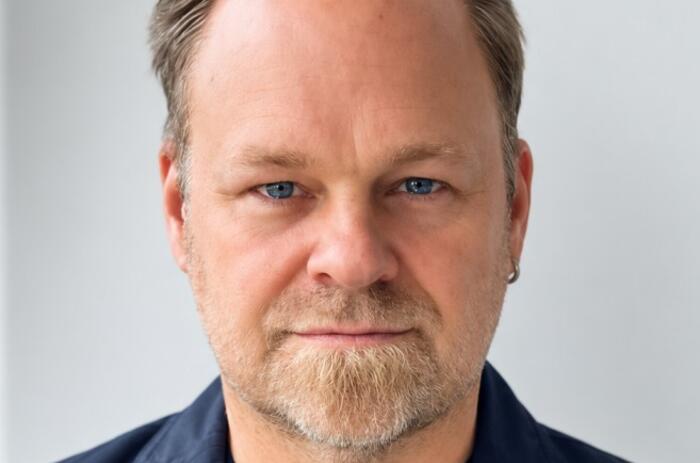
We speak with Tobias Ostrander, the Estrellita B. Brodsky Adjunct Curator of Latin American Art at Tate Modern, at a moment of growing international recognition for Latin American art, as the institution presents three major exhibitions. The conversation explores the region’s growing visibility, the reassessment of the art-historical canon, and the importance of building a global art history grounded in diverse perspectives and local contexts.

An exhibition in the Spanish capital gathers nearly one hundred photographs by the Brazilian artist, centering on the landscape aesthetics of water and advocating for the urgent need for its protection.

The Mexican cultural practitioner and president of CIMAM discusses the principal challenges facing museums—from diversity and funding to ethics and independence—ahead of the Annual Conference of an organization seeking to broaden the voices participating within it.