A FALSE CONTEXT FOR THE POLITICAL MESSAGE: MARTINAT AT FORMATO CÓMODO
By Álvaro de Benito
Martinat presents Pintas at Formato Cómodo, an analysis of political semiotics and the spread of propaganda in public space. Through the extraction of layers from urban political graffiti, these decontextualized remnants are re-signified, functioning as ephemeral records of power tensions, memory, and the urban landscape.
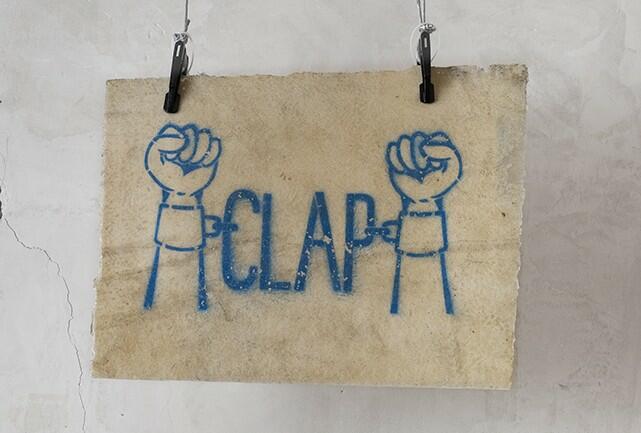
José Carlos Martinat (Lima, Peru, 1974) presents his series Pintas at the Madrid-based gallery Formato Cómodo, a body of work that, as is characteristic of his practice, revolves around political semiotics and the ways in which political messages impact and reproduce themselves in public space. Almost as a continuation of Sueño Bolivariano I, his previous exhibition at the same gallery, the artist proposes a critical analysis of these relationships, capturing propaganda materialized on walls and, quite literally, extracting it in order to rethink its meaning through decontextualization.
Martinat carries out his preliminary studies and research using a technique that allows him to extract fragments and layers of paint from political graffiti on walls—elements that are sometimes torn away and detached from their original surroundings. The presentation of these remnants offers a dual perspective: the preservation of the visual memory of these political discourses and, at the same time, the reinterpretation of their messages through decontextualization.
The works grouped in Pintas take shape as ephemeral records of everything that lies beneath the message itself, from struggles for power to their influence on the construction of urban space and landscapes. They are bearers of memory and of promised messages, seemingly caught in a dual tension between the physical and the conceptual, becoming instruments for an examination that analyzes the collective experience of public space in its most theoretically charged framework of expression.
José Carlos Martinat. Pintas can be seen until January 29 at Formato Cómodo, Lope de Vega 5, Madrid (Spain).
May interest you
MÉNDEZ BLAKE AND LEBRIJA: A LIGHTHOUSE TOWARDS INTROSPECTION, AT TRAVESÍA CUATRO
LATIN AMERICAN ARTISTS IN SPAIN: NEW NOTES FROM AN ONGOING RESEARCH
By Mónica Sotos
What are the successive diasporas of Latin American artists to Spain about, from the final years prior to the turn of the twenty-first century to the present? Article 2 of a series of 3.
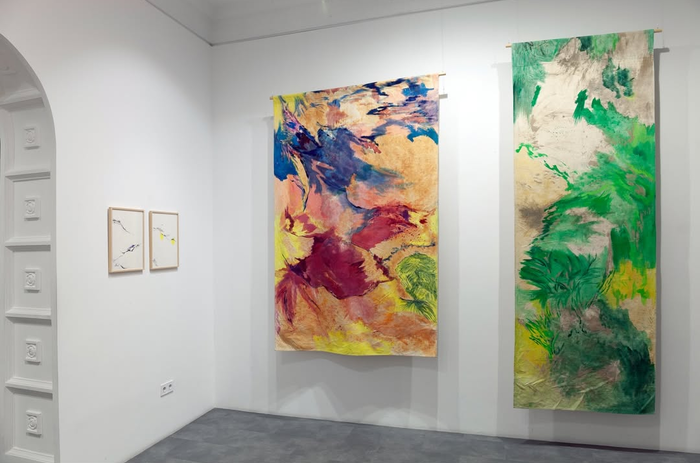
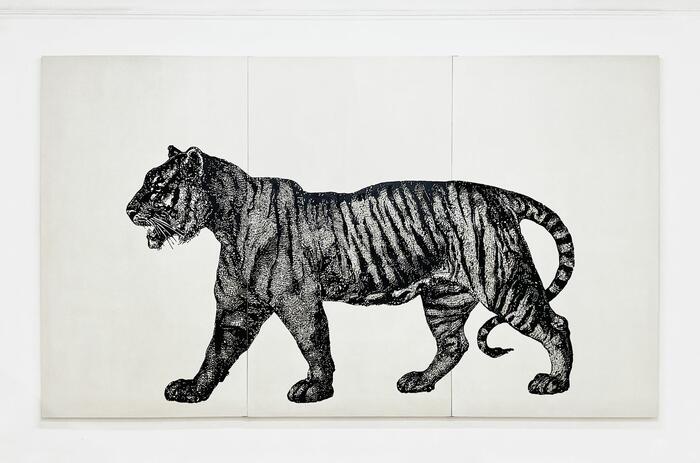
EDWIN MONSALVE: THE TRACE IN THE PROCESS OF TRANSFORMATION, AT FERNANDO PRADILLA
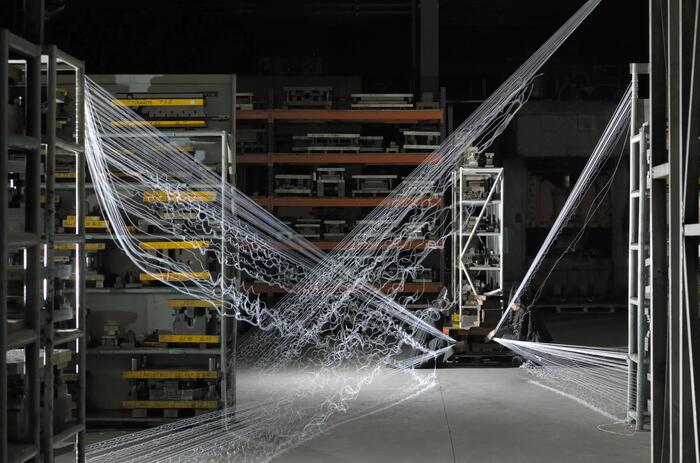
WEAVING THE INVISIBLE: MORENO AND ENRÍQUEZ IN DIALOGUE AT LA TERCERA NAVE
La Tercera Nave brings together the practices of Linarejos Moreno and Vanessa Enríquez in a dialogue centered on the material and symbolic remnants of memory. Through the concepts of textiles and weaving, both artists address fragmentation from industrial and technological perspectives.
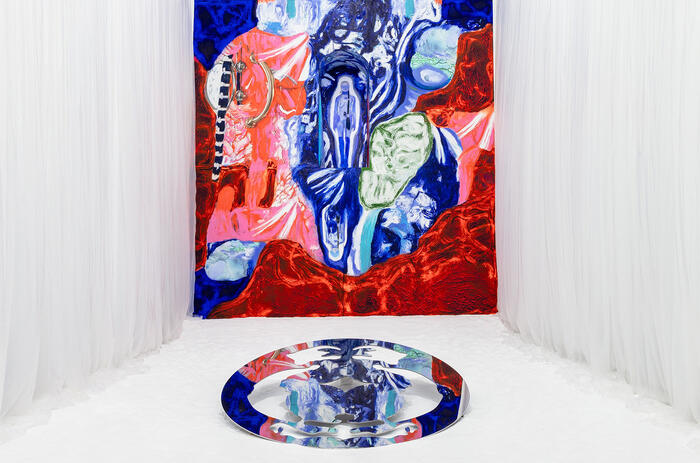
DONNA HUANCA INTERVENES IN THE CAAC WITH HER SENSORIAL LANGUAGE
The installation is constructed using the artist's usual practices, where sand, pigments, and translucent curtains come together with cosmology and contemporary languages.
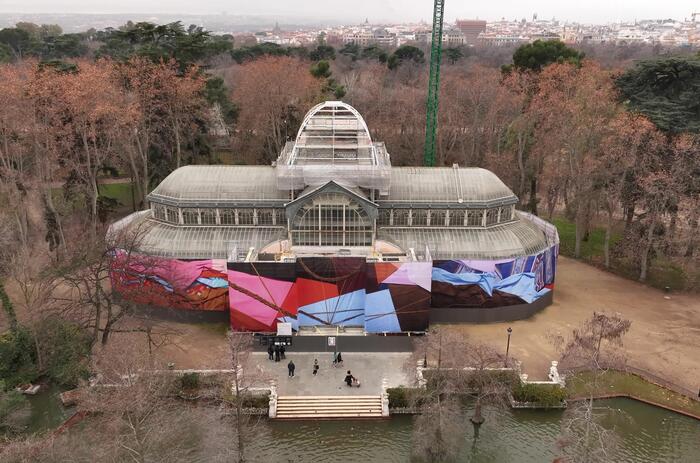
ANDREA CANEPA: THE PALACIO DE CRISTAL AS A SYMBOLIC BODY
Andrea Canepa intervenes in the Palacio de Cristal at the Museo Reina Sofía with Fardo, an installation consisting of a large tarp inspired by pre-Columbian funerary bundles that transforms the building into a symbolic body, inviting reflection on what is visible and displayed, as well as on preservation and transformation.
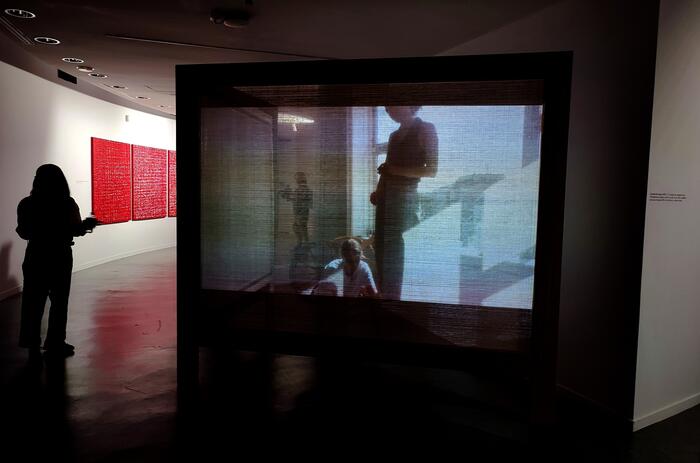
GINA ARIZPE AND THE INVISIBILIZED AT MEIAC
The exhibition traces different moments and formal strategies in her practice, marked by a critical reflection on violence, denial, and the tensions that permeate the female experience in contemporary society.
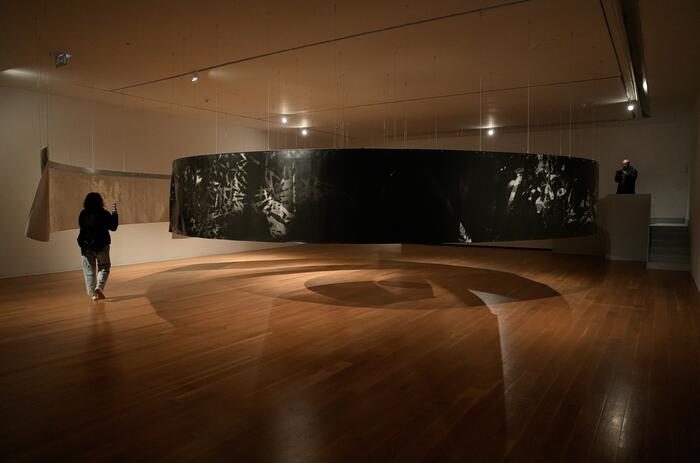
ROBERTO HUARCAYA’S PHOTOGRAMS AT MARCO VIGO
The exhibition brings together a decade of technical and poetic experimentation that transcends the traditional boundaries of photography and places visual experience at the center of reflection.