ArtexArte
PHOTOGRAPHY IN ARGENTINA
Chronological leaps and narrative soundness may be found in “Photography in Argentina 1840-2010”, the exhibition that spans the history of the discipline from its origins to the present, through canonical images and other less known ones. Occupying the entire exhibition area of Arte x Arte Gallery Alfonso y Luz Castillo Foundation, with the artistic direction of Eduardo Médici the show proposes a rereading of “the pasts from the present.” “[It is] a reappropriation of our own history...A construction of new genealogies and relationships that, rather than confirming existing sources or lines of influence, may suggest possible harmonies... ”, the curator Valeria González points out.

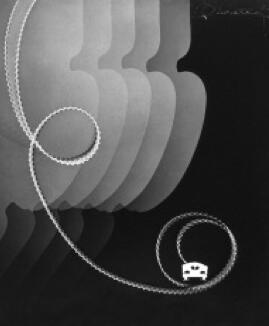
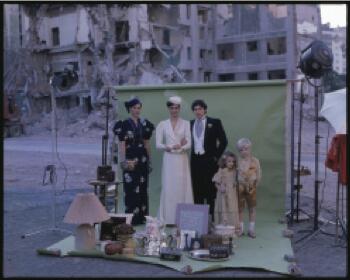
The ambitious and well-achieved proposal reviews 170 years of photography and suggests a possible history that imagines and establishes dialogues between phtographers from different moments and different worlds. González convened over 60 authors who express diverse trends, techniques, visions, and stories; while some choose a pure photographic language, others have a conversation with painting; they use photography in a testimonial way; they manipulate the image digitally; they resort to collage or approach advertising. Midway between illusion and permanence, the show is conceived in four nuclei: “Views, types and customs. Argentine photography in the 19th century, between document and artifice;” “20th Century: photography between mass culture and artistic avant- garde;” “Photography, deaths, memory;” “Post-script. Present and pasts: specificity of artistic photography in Argentina.”
The crossing of images, gazes, and contexts allows the viewer to verify even disregarding the temporal progression the rich development of photography, both in the work of photographers emerging in these territories (Francisco Ayerza, featuring pictorial photographs of gauchos), and in that of the travelers (Christiano Junior, with documentary photography) in the 19th century. Then, the contribution of the European emigrés who fled from Nazism (the remarkable Grete Stern, Anatole Saderman) was fundamental for the growth of photography in these lands.
The retrospective brings together unusual pairs of images, like those of the pioneering Witcomb Studio, with its vintage portraits of Buenos Aires socialites, and those of Julio Pantoja, with his series “Las madres del monte”, which bestows visibility on women who never dreamed of being portrayed and who currently fight against the destruction of native woods. The sobriety of Horacio Coppola’s black and white prints, featuribg his view of the Obelisk in Buenos Aires, contrasts with the strident tone of Marcos López’s image, with the “porteño” monument in the background, in the same way that Fernando Paillet’s shop interiors differ from those presented by Guillermo Srodek Hart.
Already a classic, the images by Annemarie Heinrich, who specialized in portraying movie stars of the 1940s and 1950s, and those by Pedro Otero, an artist who “photographed music,” enhanced the consolidation of new photography, conveying the splendor of the world of show business and the subtleties of modern art. Alberto Goldenstein and Alejandro Kuropatwa rest their gazes on the private lives of individuals, triggering reflections regarding what is genuine: is it that which is recorded or that which is left outside the frame? Sara Facio stands out with her series of portraits; for example, she is the author of the images of Cortázar or Neruda that many of the spectators possess.
Artists and supports weave a narrative that includes essays focusing on national tragedies (military dictatorships, Malvinas War, terrorist attack on the AMIA) in the works of Arde, Eduardo Longoni, Juan Travnik, and Santiago Porter. The current sense of unease derived from the lack of safety produced by the escalation of crime is well reflected in the series of people with weapons portrayed in their homes by Ananké Assef.
The rich material presented highlights the real artistic dimension of photography, while at the same time it enhances the value of prints on paper, which have a warmth to them that is absent from digital photographs, which are viewed on a distant liquid crystal screen. Photographs are wonderful objects that continue to convey a symbolic consistency and a unique magic.