Alex Flemming and his chaos
Galería Paralelo, Sao Paulo
For some time, we had been hoping to see in Sao Paulo one of its great artists, who has been living in Berlin for over 20 years.
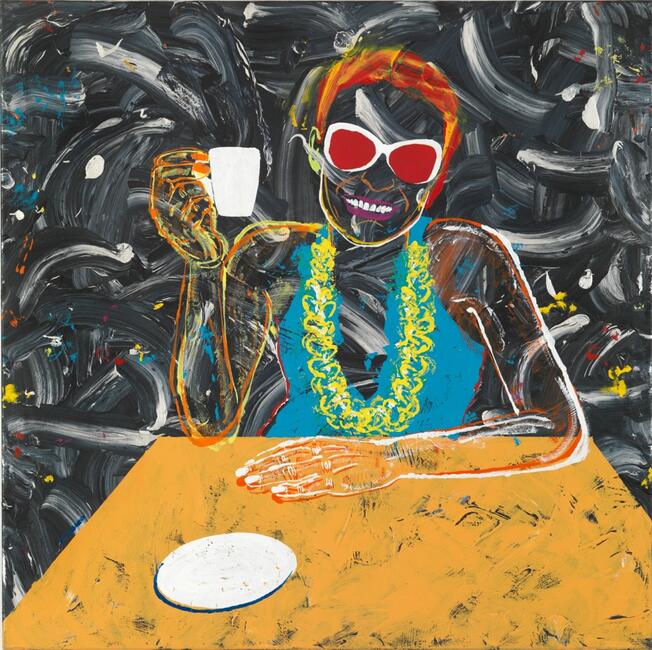
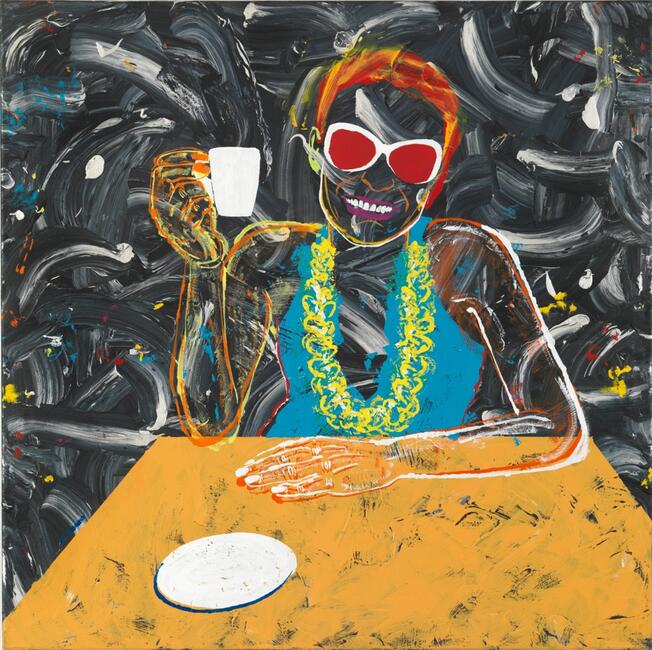
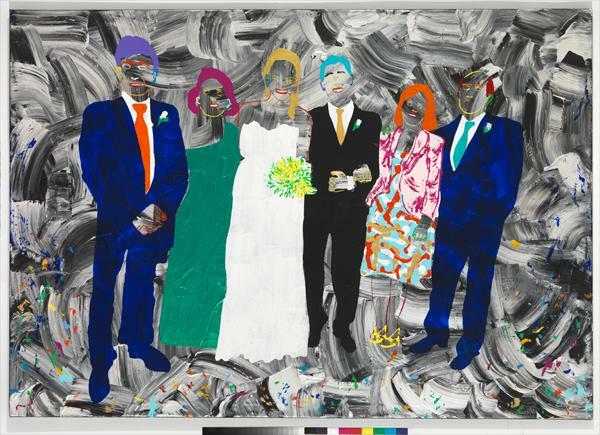
The work of Alex Flemming (Sao Paulo, 1954) along the 40 years of its history was never characterized by belonging to a trend or a specific movement. The series of ten portraits, called Caos (Chaos), which he presented on this occasion in his native town, are the result of an introspective gaze on the notion of the more classic portrait.
One of the outstanding characteristics of the artist’s most recent production is this chaos between the character and the canvas background. In a sort of clinical X-ray photograph, the artist undoubtedly pretends to document a snapshot, perhaps a moment of silence. His portraits are based on photographs of friends or acquaintances that are later translated into portraits, and it is that photograph-painting game which seems intriguing to us. This return to the traditional in painting, to the canvas as the basis, is what the artist himself highlights about the exhibition. In Alex Flemming’s view, the portrait is one of the paradigms of the history of art, and as evidenced along his career, it is always a genre to which he resorts and in which he seeks shelter. His pictorial career has had moments of great experimentation through installations and different artistic materials, but for him this has been the moment to go back to the origin, to the initial chaos.
On the other hand, another essential trait of this artist besides color and the form of those portrayed is the texture of the canvases. They are paintings to digest, to eat color, strength, expression and feeling. They are moments and persons of everyday life, of the day-to-day, who consent to be photographed and later consent to be portrayed in a painting. His characters belong to all ages, professions, types of couples, social classes….and it is this diversity which allows us to appreciate the most heterogeneous Flemming.
Lastly, and as a part of the show itself, I would highlight the staging of the exhibition. The perspective and horizontality of each work, together with the harmony of the gallery’s space, contributes to establish a balanced dialogue among the characters, contrasting once again with the strength of the works.