_Nefandus_, Award-winning Video and Solo Show by Carlos Motta in Lisbon
Nefandus, a new video by Carlos Motta won the Catalonia Hotels Award 2013 at LOOP 2013 to the best work selected by the jury (Valentijn Byvanck, Bartomeu Marí, Mark Nash and Dirk Snauwaert).
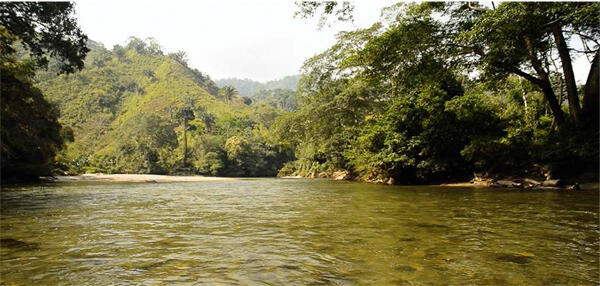
The piece, acquired by Screen Project / Loop and lent to the Foundation of the Museum of Contemporary Art of Barcelona (MACBA), Spain, also gives name to the solo exhibition of Carlos Motta in Lisbon at Galeria Filomena Soares on view through September 2013.
Nefandus features a series of works that explore the imposition of European epistemological categories onto native cultures during the Spanish and Portuguese Conquest of the Americas. The exhibition includes photographs, sculptures and a video, all of which address subjects that were deemed “exotic,” “wild,” or “native”. The works in the exhibition defy these concepts and ask for alternative narratives to colonial history.
The exhibition’s central axis is Nefandus (2013) a narrative video that investigates pre-Hispanic (homo)sexuality. While it has been widely documented that the conquistadores used sex as a weapon of domination of indigenous populations, little is known about the homoerotic indigenous traditions. How did the Christian morality, as taught by the Catholic missions and propagated through war during the Conquest, transform the natives’ relationship with sex? Nefandus, Latin for impious, abominable, or unnamable, was a common word used in Colonial Latin America in reference to sin. A “pecado nefando” (unspeakable sin) was a transgressive crime of sexual nature, such as sodomy, which was severely judged and punished. The video suggests that constructions of sexuality and the body can’t be projected onto cultures whose traditions and histories remain unknown and have been mediated by European classifications.
Other works in the exhibition question the project of modernization by means of elegiac depictions of failure. Like Santa Maria (2013), a small sculptural replica of Christopher Columbus’ largest ship, severed in the middle, reminiscing of its shipwreck near the island of Hispaniola – an event that would prevent the ship from ever returning to Spain; or Taxonomy of the Wild (2013), a large grid of photographs of crumbling murals that depict animals whose faces and bodies appear in different stages of decay. The photographs bring to mind idealized notions of what was perceived as “wild” within colonial societies.
The exhibition also presents works that refer to techniques for subjugation of indigenous groups. The installations The Spirit and the Flesh and Instrument represent instruments of torture developed during the Spanish Inquisition; and the photographs Colonial Forts depict views of the horizon over the ocean through the windows of colonial forts – spaces often used as defense strong holds and to control the distribution of native and slave labor.
Nefandus asks what would be the consequence of reclaiming historical categories and inscribing them with new meanings – through speculation, research or imagination – in order to gain greater social freedom for the present.
Nefandus is the first of two exhibitions on this topic. A second part of this project will be presented at Galeria La Central in Bogotá, Colombia in October 2013.
CARLOS MOTTA (Bogotá, Colombia, 1978) is a multi-disciplinary artist based in New York, USA. He was awarded a Creative Capital grant in 2012, was named a Guggenheim Foundation Fellow in 2008, and participated in the Whitney Museum Independent Study Program in 2005.
Motta’s work has been presented internationally in venues such as Tate Modern, London, UK; New Museum, Guggenheim Museum and MoMA/PS1 Contemporary Art Center, in New York; Institute of Contemporary Art, Philadelphia, and San Francisco Art Institute, USA; Museo de Arte del Banco de la República, Bogotá, Colombia; Serralves Museum, Porto, Portugal; National Museum of Contemporary Art, Athens, Greece; and many other independent spaces throughout the world.
Motta is part of the faculty at Parsons The New School of Design and the Milton Avery Graduate School of the Arts at Bard College, USA.
-
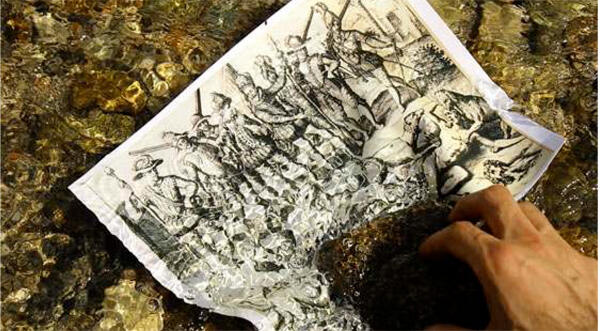 Nefandus, 2013
Vídeo HD, cor, som, 16:9 | HD video, colour, sound, 16:9
13’04’’ - Ed.5 + 2 PA / AP -
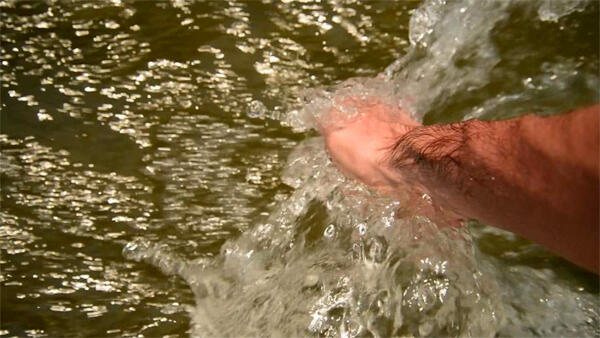 Nefandus, 2013
Vídeo HD, cor, som, 16:9 | HD video, colour, sound, 16:9
13’04’’ - Ed.5 + 2 PA / AP -
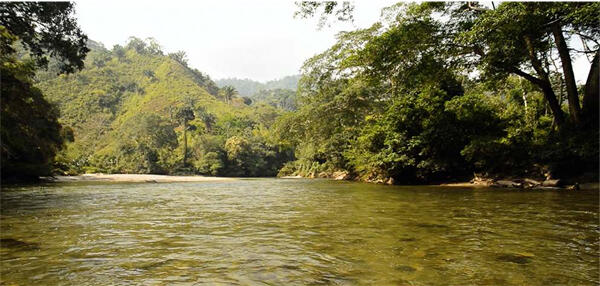 Nefandus, 2013
Video, quicktime file, HD projection, sound 13:04 min, colour (video still, pormenor/detail)