Taipei Biennial 2012: Modern Monsters / Death and Life of Fiction
The narrative-imaginary vacuum of the present bears the imprint of the systemic monstrosity of modern history. The re-visioning of modernity and the rewriting of its master narratives constitute a trans-disciplinary project of global proportions.

The Taipei Biennial 2012 departs from the crisis of the imagination that plagues global capitalist culture. It explores the need for collective horizons that withstand both the clichés of modernist development and the logic of division that haunts nationalist and identity politics in the long shadow of colonialism and imperialism.
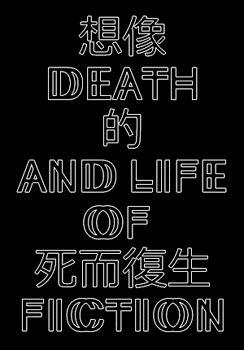
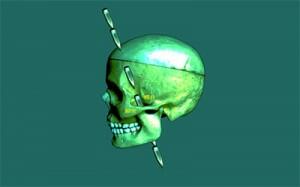
Entitled Modern Monsters / Death and Life of Fiction, the Taipei Biennial 2012, curated by Anselm Franke, addresses the relationship between historiography and the imaginary. Fiction occupies the blind spot of historiographic and documentary work, as it speaks of the fundamental underside of modernity, its dialectics and paradoxes, as well as the systemic terror that lurks behind modernity's emancipatory promises. Drawing upon a recent study titled "The Monster That is History" by Taiwanse literature historian David Der Wei Wang, the Biennial engages with the aesthetics of monstrosity. The figure of the monster is treated as a fictional, liminal figure, a symptomatic mirror of actual and imaginary relations. Wang suggests that the ancient Chinese monster Taowu served as an "objective correlative" of the human account of past experience. Taowu is furthermore identified with history as such, particularly through its vicious ability to foresee and undermine human intentions.
Featuring some 40 artistic projects, many of them conceived specifically for the exhibition, the Taipei Biennial 2012 is structured by a series of "mini-museums"—distinct spaces within the exhibition that function as autonomous propositions organized by various co-curators. While the mini-museums are self-contained spaces, they influence the registers and contextual readings of the works in the exhibition surrounding them. In each mini-museum, the relationship between works of art and documents serves as the backdrop for an interrogation of ambiguities of writing history. They are conceived as models of possible histories and narratives hidden in the interstices of official accounts. Their primary goal is to question the relation between the systemic conditions of the present and our situation in a historical imaginary.
Among the contributing artists (as of July 2012) Maria Thereza Alves, Adam Avikainen, Ashish Avikunthak, Eric Baudelaire, Fernando Bryce, Chen Chieh-Jen, Yin-Ju Chen, Chou Yu-Cheng, Chang Chao-Tang, Jason Dodge, Jimmie Durham, Harun Farocki, Omer Fast, Peter Friedl, Simon Fujiwara, Andrea Geyer, Yervant Gianikian / Angela Ricci Lucchi, Virlani Hallberg, Hsu Chia-Wei, Hannah Hurtzig, Luis Jacob, Maryam Jafri, Chia-En Jao, Kao Chung-Li, Rajkamal Kahlon, Joachim Koester, Jompet Kuswidananto, Liu Ding, Marysia Lewandowska / Neil Cummings, Joven Mansit, Angela Melitopoulos / Maurizio Lazzarato, Jakrawal Nilthamrong, Willem Oorebeek, Boris Ondreicka, The Otolith Group, Pratchaya Phinthong, Roee Rosen, Andreas Siekmann, Elisa Strinna, Teng Chao-Ming, Anton Vidokle / Hu Fang, and Sun Xun, Wei-Li Yeh.
The Museum of Rhythm with Lawrence Abu Hamdan, Erick Beltrán, Juan Downey, Francisco Camacho, Hanne Darboven, Frank G. Gilbreth, Simone Forti, Ken Jacobs, Katarzyna Kobro, Gerhard Rühm, Tomo Savić-Gecan, Yashas Shetty, curated by Natasha Ginwala; The Museum of Ante-Memorials with Robert Filliou, Deimantas Narkevičius, Peter Watkins, curated by Eric Baudelaire; The Museum of the Monster That Is History with Bavand Behpoor / Reza Abedin, Jou-jiun Gong, James T. Hong, Kelvin Kyung Kun Park, Eyal Sivan, Tony Chun-Hui Wu, curated by James T. Hong and Anselm Franke; The Museum of Gourd, curated by Chihiro Minato; The Museum of the Infrastructural Unconsciousness, curated by Territorial Agency (John Palmesino and Ann-Sofi Rönnskog in collaboration with Yi-Jen Chen); The Museum of Crossings, curated by Hongjohn Lin and Anselm Franke; among others.