THE PACIFIC'S VIBRATIONS: AN EXHIBITION AT FULCRUM ARTS
Energy Fields: Vibrations of The Pacific is an exhibition, publication, and series of public programs co-presented by Fulcrum Arts and Chapman University. Curated by Robert Takahashi Novak and Lawrence English, the exhibition presents a diverse and dynamic collection of works from artists working such as Alba Triana, David Haines and Joyce Hinterding, Steve Roden, Malena Szlam and Virginia Katz.
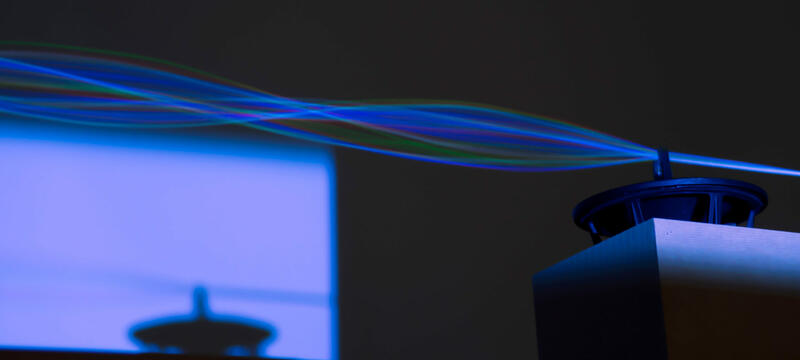
Energy Fields traces a path of investigation that intersects the fluctuation of time and space through gravitational waves, the geologic dynamism of tectonic and seismic activities and examines how sound, light, and electro-magnetic spectra affect the body and perception. The exhibition recognizes the Pacific as a zone of entanglement where these energetic forces resonate amidst the world’s most seismically active continental plates. The show, publication, and performance program invite new understandings of how these energetic forces shape scientific and cultural practices going forward into the 21st century.
Vibrations, and the waves that follow them, are fundamental to science in understanding the nature of matter in the cosmos and on earth. They are similarly a primary means of understanding human perception and experience. From traditional cultural practices to current interstellar research such as gravitational wave observation, Energy Fields: Vibrations of The Pacific is a porous exploration of shared concepts and visions. It gives audience members tactile experiences through evocative installations that are transportive and transformative, shifting psychological and physiological perception, as well as sensory awareness.
-
Minoru Sato: Thermal Acoustics, 2010 Glass tubes, Liebig condenser, Audio Oscillator, nichrome heaters, handmade amplifiers, loudspeakers, microphones
-
David Haines and Joyce Hinterding: Telepathy, 2008. Custom anechoic acoustic tiles, 16 mm plasterboard, acoustic blanket, plywood, timber frame, 3 small monitors transmitters Photographer: Michael Myers Courtesy the Artists and Sarah Cottier Gallery
Each of the works in the exhibition speaks to a certain approach to sense-making and varied approaches to understanding the material (and immaterial) implications of vibration. David Haines and Joyce Hinterding’s Telepathy (2008)—a single-occupancy anechoic chamber—allows audiences to experience and contemplate an interior relationship to sound and vibration, that which exists within our own bodies. Steve Roden’s ear(th) (2004) deepens this idea, offering an opportunity for people to recognize the energetic nature of seismic activities in Southern California through the use of a custom-built sounding system that transposes these largely inaudible vibrations into a fluid, almost musical transposition.
Additionally, Malena Szlam’s film ALTIPLANO (2018) creates visual rhythms against a soundscape generated from infrasound (below human hearing) recordings of volcanoes, geysers, and Chilean blue whales and Alba Triana’s sound sculpture Music on a Bound String No. 2 (2015) operates at the nexus of light and sound waves. Energy Fields also reflects on the contributions of Indigenous artists and traditional environmental knowledge across four continents connected by the Pacific Ocean. Virginia Katz’ works On-shore Flow and Off-shore Flow (2008) are from the university’s Guggenheim Gallery and Escalette Collection.
-
Alba Triana: Music on a Bound String No. 2, 2015. Vibrational sculpture, installation, visible sound interacting with a projected light beam Image courtesy of Alba Triana Studio, Ernesto Monsalve
-
Virginia Katz: WIND, Off-Shore Flow, 10 Hours of Observation, Gold and Copper, 10/07/08, 2008. (R) Virginia Katz: WIND, On Shore Flow, 7 Hours of Observation, Green and Blue, 3/28/08, 2008. Images courtesy of the Escalette Collection at Chap University.
Energy Fields also presents a vibrant series of public programs including artist talks, lectures, and performances including presentations from William Basinski, Ellen Fullman + Theresa Wong, Annea Lockwood, and Jeneen Frei Njootli, amongst others.
The publication brings together essays and imagery showing diverse understandings of vibration and its resultant waveforms. The essays consider how the Pacific has been a central location for significant cultural and intellectual developments around vibration, from traditional understandings and knowledge systems such as Marshall Island’s wave navigation and Maōri spiritual understandings of vibrational shimmering, to the implications of atomic testing and contemporary research on seismic and tectonic activity. We consider how these affect the individual body and allow us to expand our understanding of the world. The catalog is designed by Willem Henri Lucas, edited by Elizabeth Hamilton, and will feature essays by Rachel Shearer, Lawrence English, Rana Adhikari, Marcus Herse, Vanessa Kwan, Patrick McCray, Enrique Rivera, Fiona Shen, and Nina Tonga.
Related Topics
May interest you
LUCIO FONTANA. IL Y A BIEN EU UN FUTUR - UN FUTURO C'É STATO
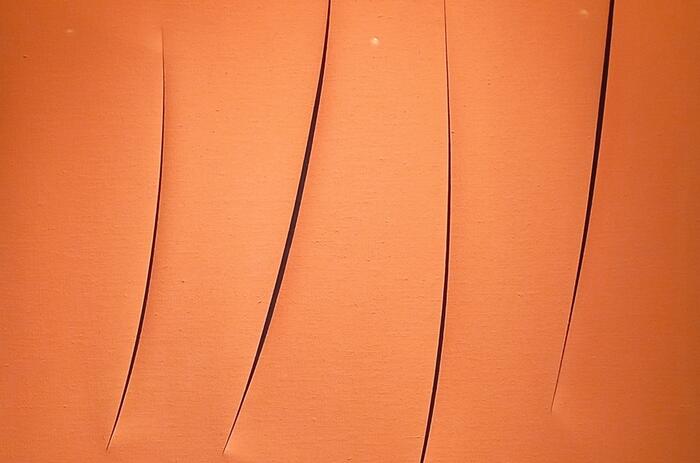
Lucio Fontana made one of the most extraordinary and radical gestures of modern art in 1958 when he cut the surface of a monochromatic canvas with a razor blade. The exhibition “Il y a eu un futur- Un Futuro c'é stato” at the Musée Soulage, Rodez, revisits the legacy of this artist and offers a survey of his entire oeuvre, before and after the war, in Argentina and Italy.
ARTEBA 2024: THE PULSE OF THE ART MARKET IN ARGENTINA
On Wednesday, August 28, the 33rd edition of arteba, the first art fair founded in Latin America and the most significant in Argentina, began. This year's event features over 400 artists represented by 65 galleries from 16 cities.
20 YEARS OF PINTA BAphoto – THE CELEBRATION OF A VISION
The most relevant art fair specialized in photography in Latin America Pinta BAphoto celebrates its twenty years of trajectory between October 24 and 27, 2024. Based in the city of Buenos Aires, it has established itself as an undisputed point of reference for photography.
SILVIA RIVAS AND THE LIMITS BETWEEN TIME AND SPACE
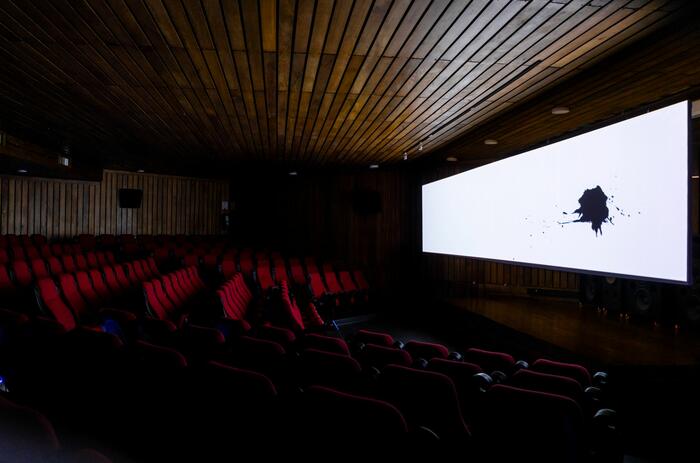
Cronotopías at the Museo de Arte Moderno de Bogotá (MAMBO) is the first institutional retrospective in Colombia dedicated to the visionary work of Argentinean artist Silvia Rivas. Since the late 1990s, Rivas has explored the expressive possibilities of expanded cinema, pushing the boundaries of video as a medium and creating multimedia and immersive environments. The exhibition is curated by Eugenio Viola.
THE ARMORY SHOW’S 30th ANNIVERSARY EDITION
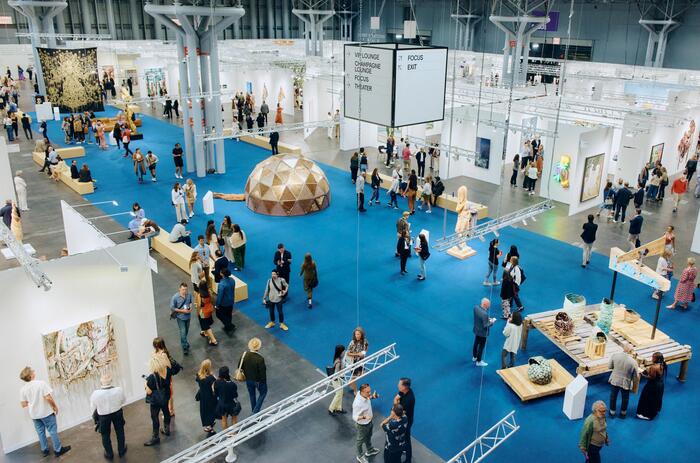
The Armory Show is taking place from September 6th to 8th. The fair’s 30th edition features over 235 galleries from 35 countries, showcasing artist projects in the Platform section, as well as highlights from sections Galleries, Focus, Solo and Presents, alongside presentation details for the Gramercy International Prize. Now part of the Frieze network, the Armory Show presents a revitalized program that offers a comprehensive view of the contemporary art world.