
PLATFORM AUSTRIA ON THE PHENOMENON OF PLATFORM URBANISM - BIENNALE DI VENEZIA 2021
Platform urbanism is one of the most controversial topics of discussion in the field of architecture. Digital platforms such as Facebook, Google and Amazon are increasingly permeating all areas of our lives and beginning to dissolve old orders and structures.
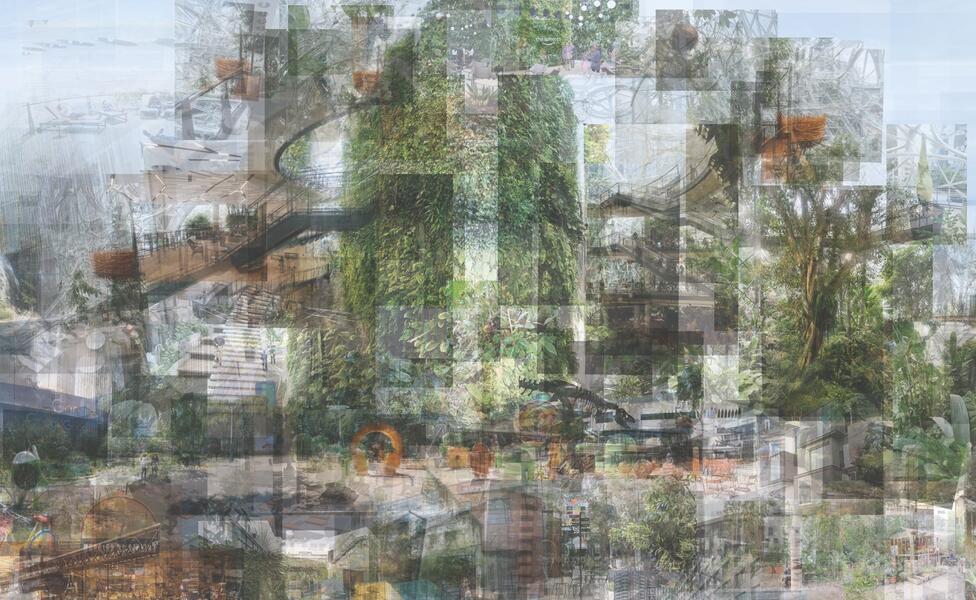
PLATFORM AUSTRIA will inquire into the development of our cities associated with the rise of platform urbanism and will transform the pavilion itself into a platform for active critical engagement with the potentials of the future and its architecture.
Until now the built form of cities has been regarded as the organizational structure best suited to the fulfilment of public tasks. This is witnessed not least by the ongoing growth of metropolitan cities. In their contribution to the Austrian Pavilion at the Biennale Architettura 2021 the curators Peter Mörtenböck and Helge Mooshammer will investigate the role digital platforms could play in the future. Will they assume a higher status than cities, and how will these two organizational models relate to one another? Are we seeing the rise of a “platform urbanism” for which virtual connections are more important than our lives in real space? Will the urban space dissolve into island-like zones in which only fragments of social exchange remain?
Precisely because the strength of platforms lies in directly interlinking previously separate fields of economic, political, social or cultural activities, we are faced with a situation in which conventional institutions of social control and instances of critical knowledge are skipped. The new phenomenon of platform urbanism, in which beautiful painting worlds are used as control instruments for urban development, is an impressive example of these developments.
In order to counteract disinformation through seductive consumption, the two side pavilions are dedicated to detailed visual analyzes of the mechanisms of platform urbanism . These installations are based on many years of research by the Center for Global Architecture led by the two curators.
The aim of PLATFORM AUSTRIA is therefore not to view the effects of platforms on contemporary architecture production from a distant position, but to expose the exhibition itself to the dynamics of an increasing platform mentality.
With a landscape designed by mostlikely sudden workshop, which invites you to meet, the Austrian pavilion presents itself as a host welcoming visitors to the global architectural discourse: the pavilion becomes a platform.
The goal of this concept is to increase participation in the architectural discourse beyond established and subject-specific circles and, with the help of this multitude of voices, to formulate a wide range of wishes for architecture as well as positive answers to the central question of the 17th international architecture exhibition La Biennale di Venezia - How will we live together? -
READ MORE ABOUT THE 17TH INTERNATIONAL ARCHITECTURE EXHIBITION
CURATORS
Peter Mörtenböck is Professor of Visual Culture in the Architecture Faculty at the TU Wien and Research Fellow at Goldsmiths College, University of London. His current work focuses on urban speculation, global resource consumption and new data publics.
Helge Mooshammer works on urban and cultural research at the TU Wien und is also a Research Fellow at Goldsmiths College, University of London. He has initiated numerous international research projects around issues relating to (post-)capitalist economies and urban informality.
Both curators are founding directors of the Centre for Global Architecture, an interdisciplinary platform for the study of global changes in the contemporary production of architecture and cities.
*cover image: PLATFORM AUSTRIA On-Stage Detail © Centre for Global Architecture 2020