NEW EXHIBITONS AT MUSEU DE ARTE DE SÃO PAULO (MASP)
NEW EXHIBITONS AT MUSEU DE ARTE DE SÃO PAULO (MASP)
Starting December 13th, the MASP will be hosting two distinguished exhibitions by German-Venezuelan artist Gego and Portuguese Leonor Antunes.
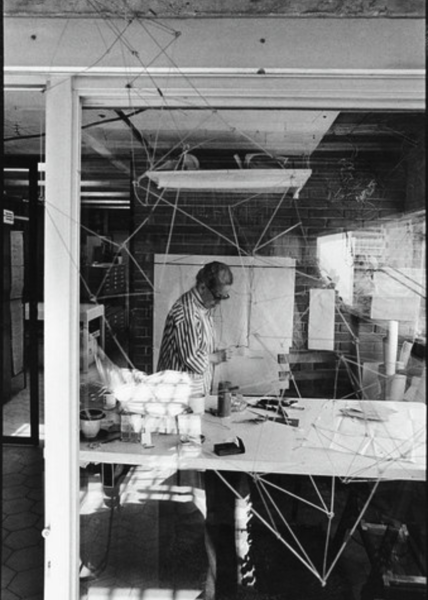
From December 2019, Gertrude Goldschmidt (1912-1994), known as Gego, receives her first solo show in Brazil. The exhibition titled Gego: The Emancipated Lines will be on display until March 1st, 2020. Along with leonor antunes: joints, voids and gaps, they both close the curatorial cycle titled Women’s Histories, Feminist Histories.
Emancipated Lines is co-organized by MASP (in charge of Pablo León de la Barra, with Tanya Barson and Julieta González) along with Museo Jumex, Mexico City, Museu d’Art Contemporani de Barcelona (MACBA) and Tate Modern, London, and will then move on to those venues.
Born as Gertrud Goldschmidt in Hamburg, 1912, Gego fled her country in 1938, escaping anti-Semitism, and moved to Venezuela. She started her artistic career in the early 1950’s, first working in watercolors, monotypes and wood engravings, before moving on to three-dimensional metal structures. During the 50’s and 60’s, Gego became a leading artist in geometric abstraction, along with Carlos Cruz-Diez, Alejandro Otero and Jesús Rafael Soto. Over her lifetime, she was preoccupied with investigating three forms of systems: parallel lines, linear knots and the effects of parallax- in which the shape of a static object changes due to the movement of the spectator’s observational position. She explored the relationship between line, space and volume in an array of systematic, three-dimensional wire assemblages. Her organic forms, linear structures and modular abstractions methodically addressed notions of transparency, energy, tension, spatial relation and optical movement.
Gego: The Emancipated Lines offers a chronological and thematic survey of the artist’s work from the early 1950’s to the early 1990’s, and includes almost 150 works ranging from sculpture, drawings, prints and textiles, and includes her vibrational and kinetic sculptures Chorros (1970-71), Reticuláreas cuadradas (1970-73), Columnas (1971), Columnas (Reticuláreas Cuadradas) (1972), Troncos (1974-77), Dibujos sin papel (1976-88), Esferas (1976-77), and Bichitos/Bichos (1987-91). The exhibition demonstrates Gego’s significant formal and conceptual contributions to modern and contemporary art, highlighting her intersections with key art movements including geometric abstraction and kinetic art, and minimalism and post-minimalism.
For Pablo León de la Barra: “Gego's interdisciplinary practice deconstructs not only the division between the imaginary and the rational –since her knowledge in geometry and architecture is combined with artistic practice– but also her own social role as a woman in a context that was mostly male. The dilemmas that Gego faced in life are still dilemmas faced by many women, both in the professional and personal fields”.
In addition to Gego’s exhibition, the MASP will also be home to leonor antunes: joints, voids, and gaps. Curated by Adriano Pedrosa and Amanda Carneiro, it opens December 13th (lasting until April 12th, 2020) with a simultaneous show at the Casa de Vidro (like the MASP, another of Lina Bo Bardi’s iconic buildings).
Born in Lisbon, in 1972, Leonor Antunes has been living in Berlin since 2005, and is one of Portugal’s most important currently active artists. Defined by the artist herself as “sculptures created in space”, her artworks establish relationships between sculpture, architecture, design, light and the body- which can be that of the spectator who walks through the gallery or the environment the artist occupies. Antunes pays special attention to the materials she uses, which are often natural or organic, and to the effects left on them by time and their use, highlighting lines and weaves, techniques and textures.
The exhibition’s title alludes to the spaces created by Lina Bo Bardi (the MASP and Casa de Vidro) and to the attentions the architect gave to “joints, voids and gaps” in the buildings. Verticality and transparence also appear as common threads in the show. In villa neufer, for example, a sculpture is made on the basis of a staircase by Albini. And Caipiras, capiau, pau a pique refers to elements used in the famous show of the same name organized by Bo Bardi at Sesc Pompeia in 1980.
Para Pablo León de la Barra: “La práctica interdisciplinaria de Gego deconstruye no solo la división entre lo imaginario y lo racional, ya que su conocimiento en geometría y arquitectura se combina con la práctica artística, sino también su propio papel social como mujer en un contexto que era, en su gran mayoría, de hombres. Los dilemas que Gego enfrentó en la vida siguen siendo dilemas que enfrentan muchas mujeres, tanto en el ámbito profesional como en el personal.”
Además de la exposición de Gego, el MASP también albergará leonor antunes: joints, voids and gaps (leonor antunes: articulaciones, vacios y huecos). Comisariada por Adriano Pedrosa y Amanda Crneiro, abre el 13 de diciembre (hasta el 12 de abril de 2020), con una exhibición simultánea en la Casa de Vidro (otra de las emblemáticas construcciones de la arquitecta Lina Bo Bardi).
Nacida en Lisboa en 1972, Leonor Antunes reside en Berlín desde 2005 y es una de las artistas activas más importantes de Portugal. Sus obras (según ella misma, “esculturas creadas en el espacio”) establecen relaciones entre la escultura, la arquitectura, el diseño, la luz y el cuerpo, que puede ser del espectador que camina por la galería o el entorno que ocupa la artista. Antunes presta especial atención a los materiales que usa, que a menudo son naturales u organicos, y a los efectos que les deja el tiempo y el uso, resaltanto líneas y tejidos, técnicas y texturas. El título de la exposición alude a los espacios creados por Lina Bo Bardi (el MASP y la Casa de Vidro) y a la atención que la arquitecta prestó a las “articulaciones, vacíos y huecos” en sus edificios. La verticalidad y la transparencia también aparecen como hilos comunes en el programa. En villa neufer, por ejemplo, Antunes realiza una escultura sobre la base de una escalera. Y Caipiras, capiau, pau a pique se refiere a elementos utilizados en el famoso espectáculo homónimo organizado por Bo Bardi en Sesc Pompeia en 1980.