
Malba
In Search of New Frontiers for Latin American Art
Eduardo Costantini frowned; he leaned over his computer screen and began to shake his head slowly in a gesture of disbelief. His displeasure was so evident that even María Bonta de la Pezuela, Sotheby’s director for Latin America, made a brief pause in her lecture. For a couple of seconds which felt like an eternity, all the people present in the auditorium of the Museum of Latin American Art Buenos Aires (MALBA) remained silent. Then silence gave way to indignation.
Bonta’s screen showed the reproductions of four works by important Latin American artists which the businessman had been forced to sell at auction in 2005 in order to pay taxes and be able to import artworks to Argentina. This is something which is difficult to understand, especially for the dozens of VIP guests who traveled from all over the world to attend the celebration of MALBA’s tenth anniversary.
It is hard to believe that a man who invested 20 million dollars to build a museum that forever changed Buenos Aires’s cultural scene, who decided to share his collection of Latin American art with the public, and who continues investing time and money to make it grow − he doubled its holdings in ten years − should have had to face in the initial stages of his project objections from the neighbors and from the Buenos Aires Legislature, reluctant to grant him more meters than those initially allocated for the construction of the building.
A clever businessman, Costantini has managed to overcome more obstacles than anyone could have imagined. The museum he had dreamed of since 1995 finally opened its doors on September 21, 2001, ten days after the attack on the Twin Towers. Three months later, Argentina underwent one of the worse crises in its history. The world for which it had been devised no longer existed, and the museum was forced to reinvent itself before having consolidated an identity of its own.
And that is what it did. Today Malba is an unquestionable reference in the regional scene, forging strategic alliances with important institutions such as the Museum of Modern Art, New York (MoMA); the Pinacoteca of the State of Sao Paulo, or the Museum of Fine Arts, Houston, where it will exhibit works from its collection in 2012. For the challenges to be faced by the Museum in the next few years include the expansion of its premises and the presentation of its collection in the United States.
”An institution must grow, because if it doesn’t, it lags behind the times,” Costantini explained in the course of an international seminar that attracted to Malba experts in Latin American art such as Luis Enrique Pérez-Oramas (MoMA); Hans-Michael Herzog (Daros); Mari Carmen Ramírez (Museum of Fine Arts, Houston), Natalia Majluf (Lima Art Museum-MALI) and Marcelo Mattos Araújo (Pinacoteca of the State of Sao Paulo), among others. Their opinions on the regional scene are available at http://www.ustream.tv/channel/malbaenvivo.
Among the topics addressed, special mention may be made of the changes that took place during the past decade, the difficulties institutions are confronting, the role of art critique, and the endless discussion about the existence of a “Latin American art”. “We must put an end to the debate on the peripheral and acquire self-esteem”, Herzog expressed. “Today the world has become de-centralized, the center is in people’s minds: one may work very well from Neuquén.”
In the United States, the concept of “Latin American art” has changed radically since the presentation in 2004 of the exhibition Inverted Utopias: Avant-Garde Art in Latin America, curated by Mari Carmen Ramírez and Héctor Olea, in the Museum of Fine Arts Houston. PINTA Fair, which is held in New York and London, and which will feature its seventh edition in November, has also contributed to make the region’s production transcend the reductionist stereotype through which it was known in the rest of the world.
Inside the institution, however, there is still a great deal to be done. “We are just leaving the ‘identity neurosis’ behind,” Adriana Rosenberg, of Fundación Proa, asserts. Latin American art has just made its debut in society, but we are going through an adolescent stage; now we must enter an adult stage.”
What one notices in Latin America, Mari Carmen Ramírez remarked, is “an obsession with legitimization and access to the art centers, and not with the transformation of local entities so that they may compete with those in the center.” According to Ramírez, it is necessary to “seek new frontiers that are not those derived from the market.”
-
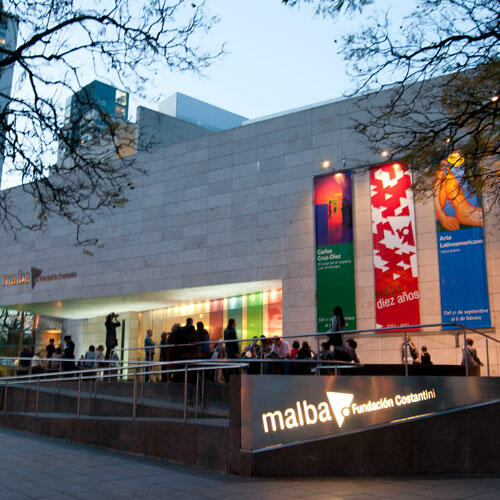
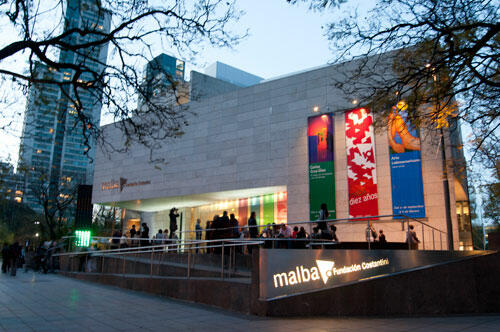 Malba’s (Museum of Latin American Art of Buenos Aires) façade. Courtesy Malba.
Fachada Malba (Museo de Arte Latinoamericano de Buenos Aires). Cortesía: Malba. -
 Courtesy/Cortesía: Malba
 -
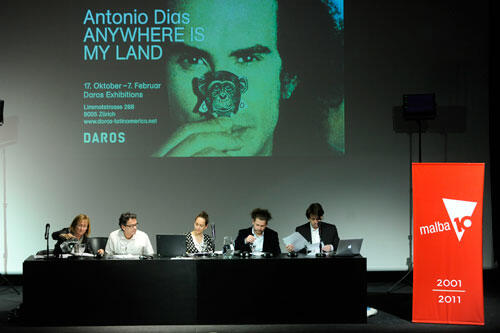 “Latin American Art: Ten Years of Changes, Perspectives and Projections”. Courtesy Malba. Seminario Internacional “Arte latinoamericano: Diez años de cambios,
perspectivas y proyecciones”. Cortesía: Malba. -
 Courtesy Malba. Exposición: “Malba. Diez años”. Cortesía: Malba.
 -
 Courtesy Malba. Exposición: “Malba. Diez años”. Cortesía: Malba.
 -
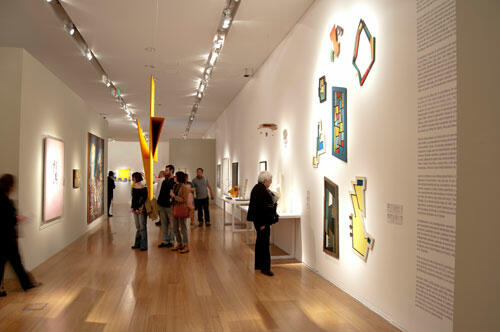 Courtesy Malba. Colección permanente + Comodatos MFAH. Cortesía: Malba.