MOROCCAN TRILOGY: A JOURNEY THROUGH THE ARTISTIC MOVEMENTS OF THE LAST 70 YEARS
In line with the programmatic axis of decolonial research that the Reina Sofía Center of Art National Museum has been developing, the Spanish institution is exhibiting Moroccan Trilogy. 1950-2020. Curated by Abdellah Karroum and Manuel Borja-Villel the exhibition focuses on the artistic production of the North African country over the last 70 years. Taking into account the proximity between Spain and Morocco, the Museum not only highlights the importance of this country and its culture, but also the influence that both Morocco and the rest of the southern shores of the Mediterranean have exerted (and continue to exert) on Western art since its beginnings.
The exhibition is organised within the framework of the cultural cooperation programme between Spain and Morocco and will be on display at the Museum until September 27.
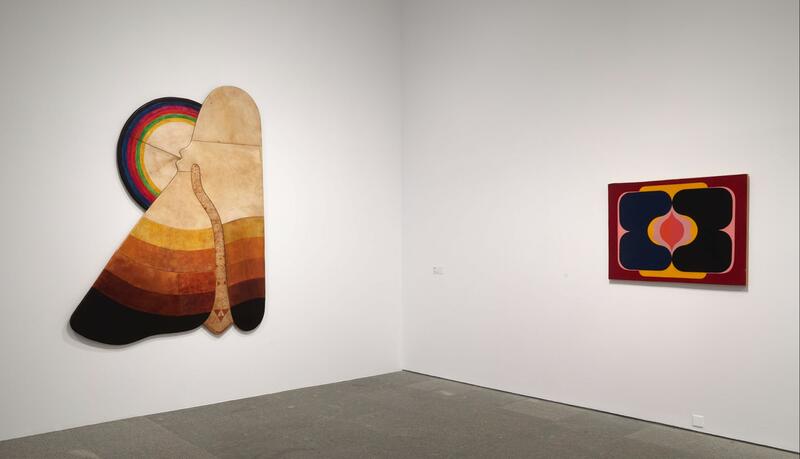
Moroccan Trilogy. 1950-2020 is divided into three periods: 1950-1969, 1970-1999 and the last two decades of the 21st century. In each case, the curatorial team has endeavoured to make the most important figures visible throughout each historical period while also highlighting the displacement of interests and political and social conflicts in the country.
The first two decades addressed by the exhibition include artworks from the last years of Morocco under the tutelage of Spain and France and its first years as an independent country. As a consequence of a convulsive political context, the artistic productions created during these years reveal the emergence of nationalist movements and the need for artists to develop an identity within art. As the Museum team explains, these two thematic axes mark a large part of the art developed between the 1960s and 1970s: "The approach of these artists consisted of questioning the traditional artistic academicism transmitted through art teaching in Morocco". It is from this point that artists such as Mohamed Melehi, Mohamed Chabâa, Farid Belkahia, Mohamed Hamidi, Mohamed Ataallah and Mustapha Hafid emerged, fundamental figures in the transformation of Moroccan art schools. It is also during these years that Tangier became the main city for the beat generation, giving rise to the appearance of voices such as Abdellatif Laâbi, with the Souffles magazine, or Mohamed Choukri, in books such as Tennessee Williams in Tangier.
The second period covered by the exhibition focuses on the proliferation of publications and the management of biennials and alternative events. This is a time when literature assumes a leading role in countercultural movements. A current of artists —Chaïbia Talal and Fatima Hassan, for example— emerged, promoting a de-intellectualised and non-academic production, a current that would become inescapable during the 1990s with artists such as Mohamed El Baz, Mounir Fatmi and Yto Barrada.
-
"Disobe", Soukaina Joual. Ph: MNRS.
-
"Trilogía Marroquí 1950-2020", Museo Nacional Centro de Arte Reina Sofía, 2021. Ph: MNRS.
-
"Ventanas sobre imágenes/ Pinturas objetos", Abderrahman Meliani. Ph: MNRS.
-
"Trilogía Marroquí 1950-2020", Museo Nacional Centro de Arte Reina Sofía, 2021. Ph: MNRS.
-
"Mi vida", Mohamed Larbi Rahhalii Ph: MNRS.
Finally, the period 2000-2020 is dedicated to giving visibility to new trends in contemporary Moroccan art. The artworks exhibited are mainly characterised by a rupture with formal issues, a significant participation of women (a characteristic that assumes much more value if we place it in the context of Moroccan culture) and a constant dialogue with the movements taking place on the fringes of conventional art circuits.
In a country whose presence in southern Europe is undeniable, Moroccan Trilogy. 1950-2020 is not only an acknowledgement of Morocco's culture as a contributor to European culture, but also an exhibition that presents itself as a museum of Morocco's artistic heritage since its independence. An unprecedented opportunity to discover the contemporary cultural heritage of one of the countries that has been fundamental in shaping contemporary Mediterranean culture.
Trilogía marroquí 1950-2020 from Museo Reina Sofía on Vimeo.