Leonora Carrington Passing on the Global Press
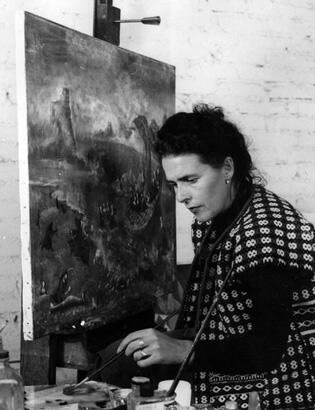
Important papers from the entire world covered the death of Leonora Carrington, but the recognition that they give –as usual with the great Latin American masters- is restricted. With the title “Debutant turned surrealist Leonora Carrington dies at 94” The Guardian from Londres reported the news about the death of the Lancashire-born artist, referring to her “as one of the greatest – and last surviving– female surrealist artists”. The article stressed that she was associated with host of 20th century greats.

While The Guardian is one of the mass media that pays her the most honor, but it restricts her importance by circumscribing her to the surrealist “women”, designation that on the other hand, she did not share. In their part, The New York Times attributes the beginning of her active creativity to her relationship with Max Ernst, and connects her exhibitions in the Matisse gallery in New York, with the friendship of her husband with Picasso and other figures. Instead of making an assessment of the own artistic importance of Leonora Carrington, they emphasize that she was one of the last living links with the world of the great Surrealist. Finally, while mentioning her book La Casa del Miedo: Memorias de Abajo ( The House of Fear: Memories from Beneath), it identifies it wrongly with an analogy of her work and it qualifies it as surrealistic fiction, when in reality it recounts the true horror lived in a mental institution in Madrid.
Stepen Bates, from The Guardian, wrote that the artist, who had lived in Mexico since the 1940s, was the daughter of a textile magnate and was presented at court in the 1930s. But she became enthralled by surrealism as an art student and befriended many of the great artists of the 20th century, including Ernst, with whom she lived in France, Picasso, Dalí, Duchamp, Miró and Man Ray.
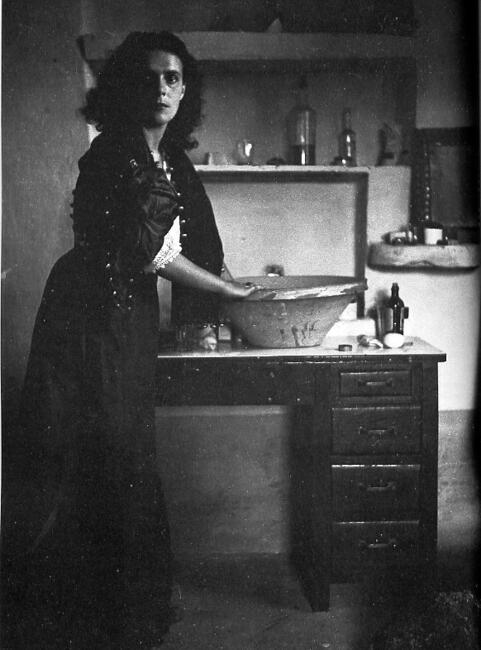
Bates made a recount of how during the second world war, when Ernst was interned by the Vichy regime, Carrington fled to Madrid, where she had a nervous breakdown and was briefly confined to an asylum, before being rescued by a Mexican diplomat, Renato Leduc, whom she married in Lisbon and with whom she moved to Mexico City.
The Guardian mentioned that in 1943, her work was chosen for an exhibition of significant women artists in New York, by Peggy Guggenheim, Ernst's new partner, and how he painting The Giantess, was sold at Christie's for $1.5m two years ago.
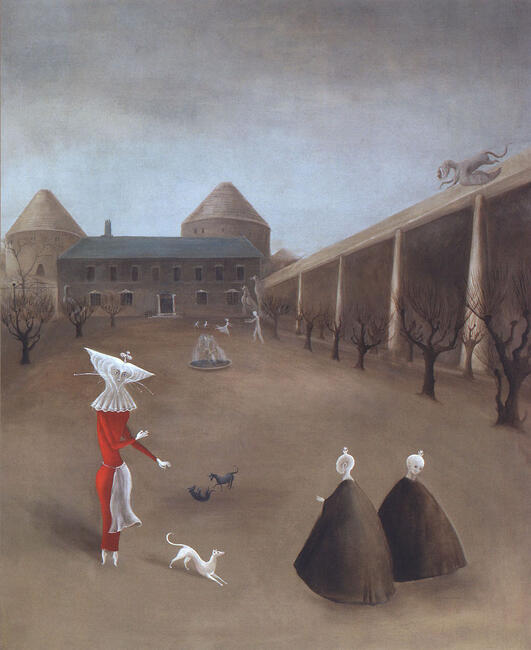
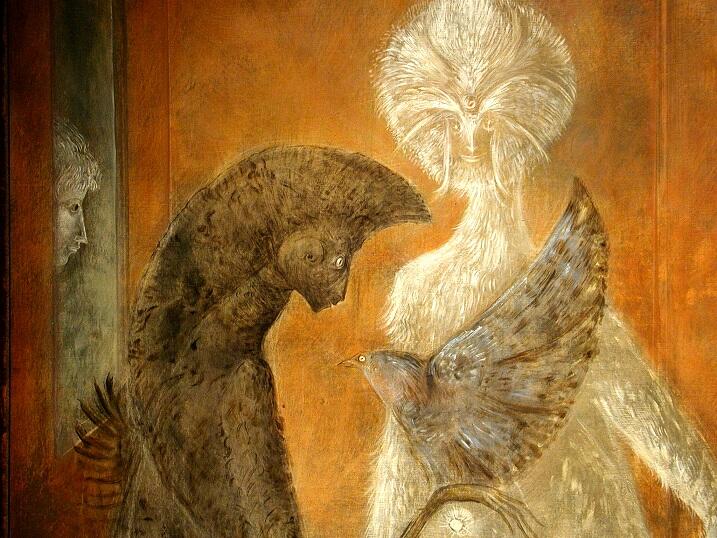
For its part, William Grimes, from The New York Times described her paintings saying that its depicted women and half-human beasts floating in a dreamscape of images drawn from myth, folklore, religious ritual and the occult. He also mentioned that she was one “of the last living links to the world of André Breton, Man Ray and Miró”, and retells the history of her love with Max Ernst who introduced her to the Surrealist circle. “With her striking looks and adventurous spirit, she seemed like the ideal muse, but the role did not suit”.
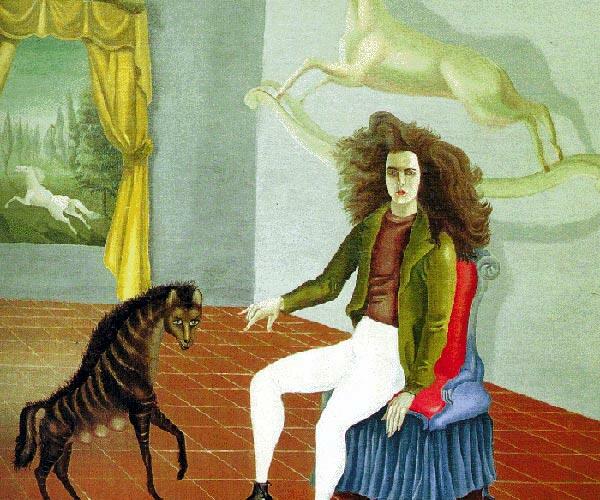
Grimes recalls how, encouraged by Ernst, she painted and wrote. But she used to say she had begun to create from conception. The article punctuates that in 1939 she produced her first truly Surrealist work, “The Inn of the Dawn Horse (Self-Portrait)”, that shows an androgynous-looking woman seated in a room with a rocking horse on the wall, extending her hand to a hyena.
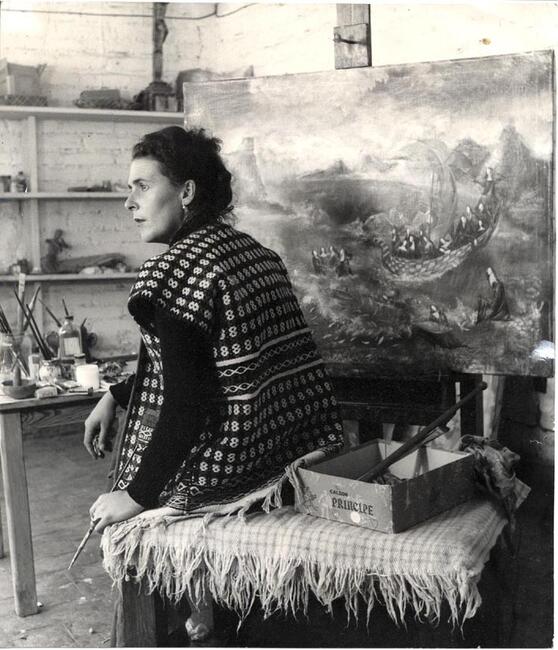
Her interest in animal imagery, myth and occult symbolism deepened after she moved to Mexico and entered into a creative partnership with the émigré Spanish artist Remedios Varo. Together the two studied alchemy, the kabbalah and the mytho-historical writings Popol Vuh.
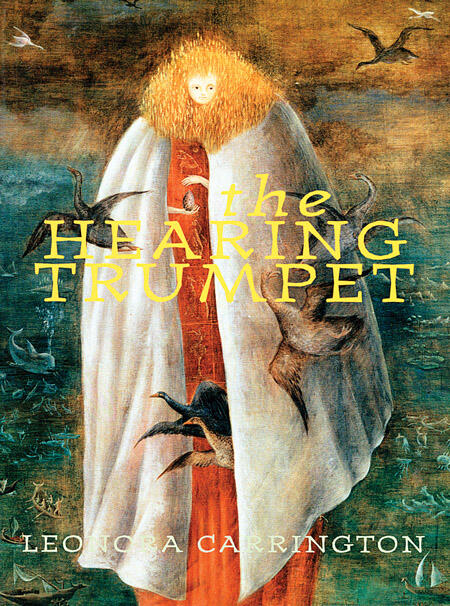
The New York Times also highlighted how Carrington had solo shows at the Pierre Matisse Gallery and was included in group shows at Peggy Guggenheim’s Art of This Century gallery and at the Museum of Modern Art. Also remembers that she wrote stories and novels in the same surrealist vein of her work. In reality she never published any surrealist novel and it would be more exact to connect her work with fantasy literature. The comprehension of the dimension of her work is left for posterity. In this, it will result vital the work of rereading those pieces that can change the vision of the history of art, particularly in the case of the Latin American art.