James Cuno Named as New President and Director for the J. Paul Getty Trust
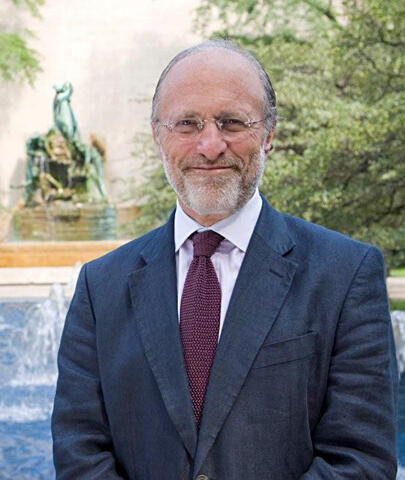
The Board of Trustees of the J. Paul Getty Trust announced today that James Cuno, recognized both nationally and internationally as a noted museum leader and scholar and an accomplished leader in the field of the visual arts, has been named president and CEO of the J. Paul Getty Trust. Cuno, comes to the Getty after serving since 2004 as president and Director of the Art Institute of Chicago, the second-largest museum in the country, after the Metropolitan Museum of Art.

At the Art Institute he oversaw the construction of its $280 million Modern Wing, designed by Renso Piano, which enlarged the museum in more than 250,000 square feet opening in 2009, situating the institution as a leader center for contemporary art. Cuno will assume his new post in at the J. Paul Getty, a Museum, conservation institute, a research institute and a foundation, on Aug. 1.
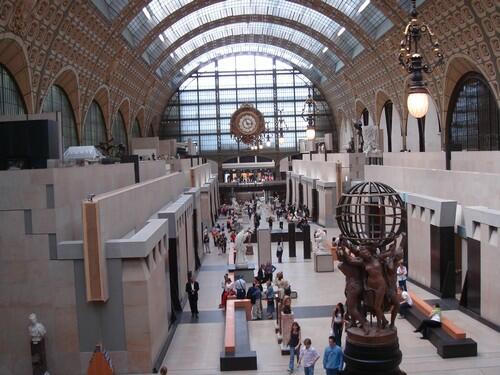
Prior to directing the Art Institute of Chicago, one of the world’s leading encyclopedic art museums, Cuno was the director and professor of the Courtauld Institute of Art, University of London, from 2003-2004; the Elizabeth and John Moors Cabot Director of the Harvard University Art Museums and professor of the history of art and architecture at Harvard from 1991 to 2003; director of the Hood Museum of Art, Dartmouth College, from 1989-1991; director of the Grunwald Center for the Graphic Arts, UCLA, from 1986-1989; and assistant professor of art, Vassar College, from 1983-1986. Cuno, 60, received his A.M. and Ph.D. in the History of Art from Harvard in 1980 and 1985, respectively; an M.A. in the History of Art from the University of Oregon in 1978; and a B.A. in History from Willamette University in 1973. A Fellow of the American Academy of Arts and Sciences, Cuno is a prolific author and lecturer on museums and cultural policy. His most recent book, “ Museums Matter: In Praise of the Encyclopedic Museum”, will be published by the University of Chicago Press later this fall.
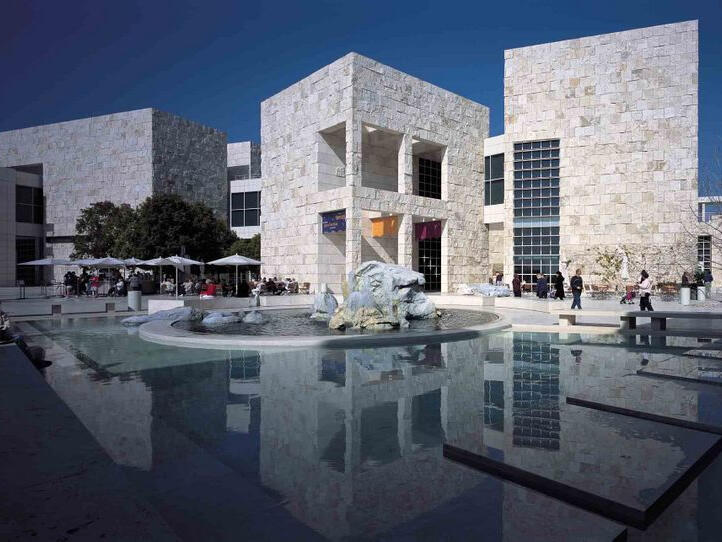
Mark S. Siegel, chair of the Getty’s Board of Trustees said, “Jim’s background as a scholar and arts leader, and as a proven executive at major arts institutions in the United States and Great Britain, made him an ideal candidate to lead the J. Paul Getty Trust. The Getty operates locally through its highly regarded Museums at the Getty Center and at the Getty Villa, and globally through the work of its four programs. The Getty needs a leader with an understanding of all aspects of the visual arts, who is known and respected around the world for intellectual curiosity and achievement. But the Getty also needs an experienced executive who has the managerial and strategic skills needed to lead a complex organization. Jim’s proven record gives our Board confidence that he, working with our outstanding management team, will be able to lead the Getty to ever greater accomplishments.”
According to the New York Times, Siegel said the board looked long and hard at the trust’s structure as it searched for a new leader, and the arrival of Cuno “will undoubtedly cause the trust to re-examine its priorities”.
Until now, the trust’s structure has been conceived in a way that the director of the museum answers to the president of the trust. Last year the museum’s director Michael Brand, resigned prematurely after differences with the Trust´s President over the museum’s direction. Also en 2004 the then Getty museum director resigned in similar conditions.
In the news spread by Art in America Stepanie Cash wrote: “The choice of Cuno is an interesting one for the Getty, given its central role in the international antiquities scandal that began in 2005 and resulted in the indictment in Italy of the Getty's longtime antiquities curator Marion True; Italian authorities dismissed her case last fall”. Also, Cash recall that in 2008, Cuno published Who Owns Antiquity?, in which he advocated a return to the system of partage, whereby archeological finds were shared among local authorities and sponsoring institutions—universities, museums—not retained solely by the host country.
Cuno said to the New York Times that he sees the Getty “more like a university than a museum.” He described the chance “to run such a broad-based art institution as irresistible”.