IAC
In the Brazilian scene, where there is still an evident absence of cultural centers with a minimally coherent program in which a sequence of exhibitions and events is clearly determined by an overall vision and not merely by the circumstances (or more often, by the difficulties) of the moment, the Instituto de Arte Contemporáneo (Contemporary Art Institute) (IAC), inaugurated in Sao Paulo in 2006, constitutes a healthy exception. The fruit of the efforts and dedication of art dealer and gallery owner Raquel Arnaud, the IAC came into being with the object of preserving, studying and disseminating the work and, fundamentally, the documentation (namely, the correspondence, projects, printed or hand-written material, etc...) of four of the leading Brazilian artists of the second half of the 20th century: Amilcar de Castro (Paraisópolis, 1920 – Belo Horizonte, 2002), Mira Schendel (Zurich, Switzerland, 1919 – Sao Paulo, 1988), Sergio Camargo (Rio de Janeiro, 1930 - 1990) and Willys de Castro (Uberlândia, 1926 – Sao Paulo, 1988). The constructive and concrete matrix, which was a determining factor for the development of Brazilian art as of the decade of the 1950s, deeply marks the mature style of Amilcar de Castro and Willys de Castro, both of them considerably committed with the intense debates that accompanied the emergence, in Brazil, of the Concrete and Neo-Concrete movements (the latter founded in 1959 by the mentioned Amilcar de Castro, among others, and embraced by Willys de Castro), but independently of these common characteristics, the group of artists selected might be considered surprising, for in spite of their belonging to the same generation, the resources they used were quite different. His being open to experimentation in fields that complement artistic practices, for instance, significantly marked the trajectory of Amilcar de Castro, who played a relevant role as a graphic designer, and mainly that of Willys de Castro, who was also a poet, a translator, a costume designer, and even a singer (baritone), and it contrasts with the almost monastic work methodology of Mira Schendel and Sergio Camargo, characterized by subtle variations on a few themes, and by the unceasing recurrence of white (both in the case of paper and of marble). Besides, neither of them considered concretism a dogma to be adopted or stigmatized: having abandoned figuration at the beginning of the decade of the 1960s, Sergio Camargo’s sculpture approached the more constructive styles taking a different path, more specifically, that of Op Art, with which his production was initially associated. Awarded recognition through the dedication of special exhibition spaces at the 33rd Venice Biennial (1966) and the 4th Kassel Documenta (1968), he gradually refined his vocabulary, apparently elementary and synthetic due to its composition based on few elementary forms, always combined in an extremely elegant way. Finally, the delicate and intensely poetic works of Mira Schendel, for whom constructivism was far from constituting a dominant reference, represent a special case. Extremely personal, her paintings, and mainly her works on paper, constitute a silent demonstration of the strength that may be derived from a rarefied, apparently hesitant work, which does not, however, shun from confronting certain densely philosophical subjects.
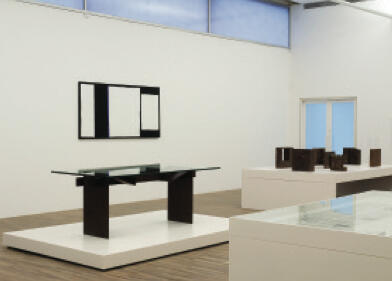
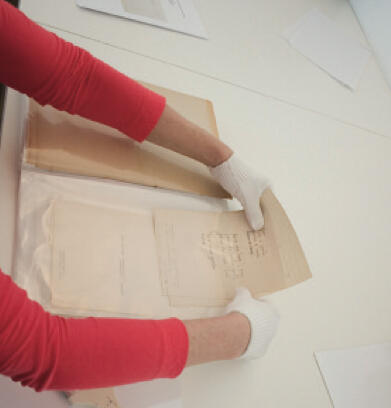
If the group of artists represented appears, threfore, to be heterogeneous, that fact, instead of diminishing the relevance of the IAC’s mission increases interest in its activities, especially bearing in mind that there are plans to increase, in the coming years, the number and range of artists and include, besides historical names such as Alfredo Volpi, Oswaldo Goeldi and Lothar Charoux, an artist who is still at the height of her career: Iole de Freitas, born in Belo Horizonte in 1945, and one of the highlights at the most recent Kassel Documenta, to mention just one of the numerous national and international exhibirions in which she has participated. The selection of artists whose documentary legacies will be preserved and studied by the IAC’s team is carried out by the institution’s curatorial council, which guarantees both the artist ́s representativeness in the context of the history of Brazilian art and the relevance of the existing documentary fund. These are, evidently, considerations that might be defined as “technical” , that is, based not on some kind of historical or thematic trait, but on factors regarding what is actually relevant and worthy of being preserved, within a historical perspective. Thus, the IAC inaugurates in Brazil an institutional format that is quite innovative and original insofar as it is the exposition activities that set the academic and investigative bearings and not vice-versa. In this respect, it is significant and even coherent, that the number of artworks that the IAC possesses be extremely limited, reduced practically to a fund comprised of a few dozen works by Mira Schendel. The rest of the institution’s patrimony consists mainly of archival material, which in spite of not being, apparently, too attractive for a lay audience, constitutes an extremely rich and stimulating material for curators and researchers. The exhibition curated by Lorenzo Mammi in 2009, and entitled Desenho e Design: Amilcar de Castro e Willys de Castro, showed the points of contact between the two artists (especially in the fields of art and design, graphic design in Amilcar’s case, and graphic and fashion design in Willys’s) to a great extent through this archival material, which resulted in one of the most interesting exhibits staged by the IAC to date. Most recently, the IAC organized the first of a series of exhibitions focusing on important local private collections that it intends to present in an annual sequence over the next two years; artistic patrimonies of great value, most of them, although almost unknown. In a country where the acquisition policies of public museums frequently do not meet expectations, this initiative may play a relevant role in terms of filling some gaps in the knowledge of recent Brazilian art.