
FAREWELL TO COLOMBIAN MASTER BEATRIZ GONZÁLEZ
One of the most prominent figures of contemporary Latin American art passed away this Friday at the age of 93.
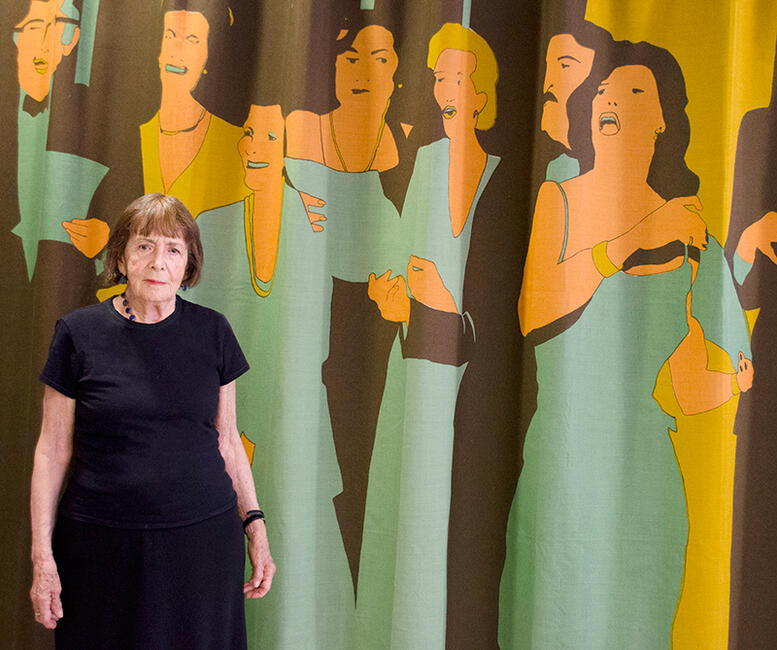
Colombian artist, historian, curator, and critic Beatriz González (1932–2026) passed away this Friday at the age of 93. Over the course of six decades, she “consolidated a body of work that is, above all, an exercise in political history,” the Museo de Arte Moderno de Medellín (MAMM) shared on its social media.
Beatriz González carried a revolutionary impulse that led her to address what the country preferred to ignore, to circulate through international art scenes, and to position a critical Colombian perspective within the global canon. She found in art a space from which to engage political memory, and in 1978 she promoted the creation of the MAMM with the aim of establishing a space open to the disruptive.
-
Beatriz González. Los suicidas del Sisga No. 3. Óleo sobre tela, 100x85 cm. 1965
Throughout her career, González challenged the hierarchies of academic art by incorporating popular aesthetics, graphic journalism, and Colombia’s material culture into the museum sphere. Her work consistently explored color, technique, and visual references, enabling processes of appropriation and re-signification of images drawn from everyday life and the mass media.
Born in Bucaramanga, she trained as a Master of Fine Arts at the Universidad de los Andes, where she began a path that would lead her to become a key figure for understanding the relationships between art, politics, and memory in Colombia.
-
Beatriz Gonzalez. Auras anónimas, Cementerio Central de Bogotá. Fotografía: Laura Jiménez
Among her most remembered interventions is the one carried out in 2009 at the four columbariums of Bogotá’s Central Cemetery, where she intervened 8,957 niches with silhouettes of soldiers and peasant carriers bearing bodies. The work transformed a neglected space threatened by ruin into a site of collective mourning.
Inspired by images of violence recorded by photographers across the country, González conceived this project as a way of accompanying families who were never able to recover their loved ones who disappeared during the armed conflict. “The disappeared have no name, they have no place, so I think that giving the disappeared a place of mourning is truly a task,” she stated in an interview with EFE in 2021.
Although the last remains were removed from the columbariums in 2005, the artist proposed preserving the site as a memorial to the thousands of auras that once rested there. Through the repetition of the figures of the carriers, she sought to “capture” and “seal” those presences, granting them a symbolic space of permanence.
“Her passing marks the closing of a fundamental chapter for contemporary art, but her legacy remains in the structures of this institution that she helped to build,” the MAMM stated in bidding farewell to the artist.
Related Topics
May interest you
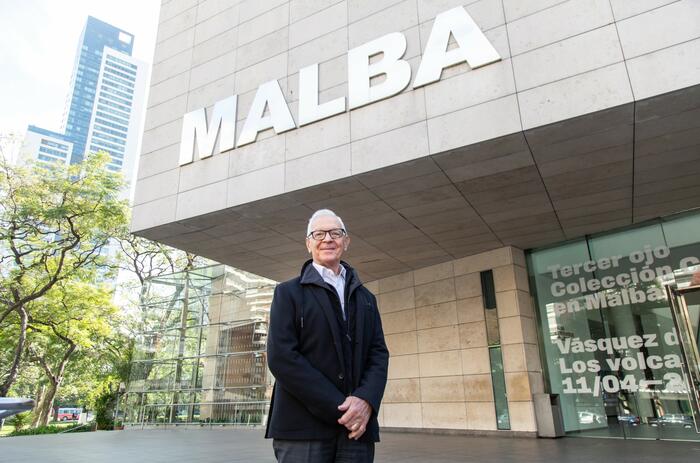
COSTANTINI ACQUIRES THE DAROS LATINAMERICA COLLECTION AS PART OF MALBA’S STRATEGIC EXPANSION
In a historic operation that nearly doubles its holdings of modern and contemporary Latin American art, the museum moves forward with the expansion of its headquarters and consolidates its position as one of the region’s leading international institutions.
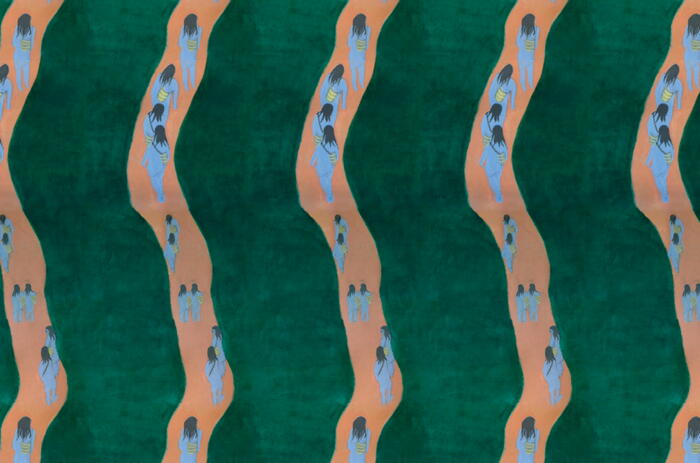
BEATRIZ GONZÁLEZ IN OSLO: THE MAJOR RETROSPECTIVE THAT CLOSES A LEGACY
Astrup Fearnley Museet presents 150 works by the Colombian artist, who passed away in January 2026. An exhibition she helped plan herself, spanning six decades of everyday images, political violence, and a palette all her own.