Art Basel Cities 2018: An artistic journey through Buenos Aires
Artistic director Cecilia Alemani shares highlights of ‘Hopscotch’, her citywide exhibition, part of the 2018 Art Basel Cities Week in Buenos Aires
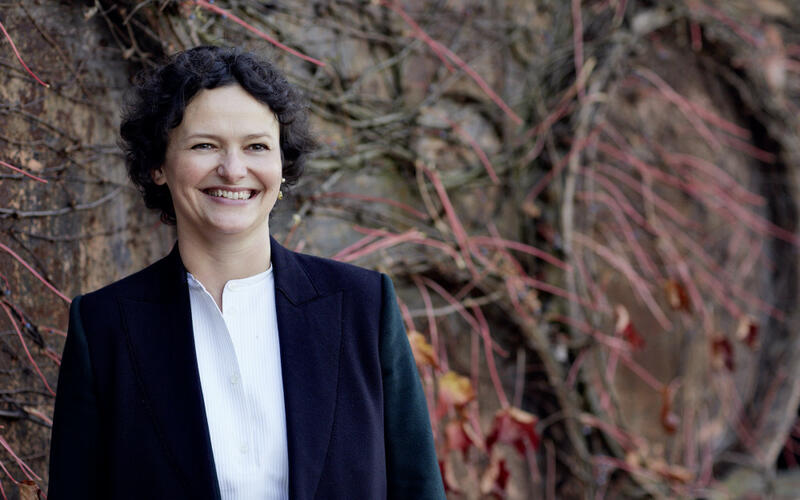
From September 6-12, Cecilia Alemani is curating ‘Hopscotch (Rayuela)’, an exhibition of artworks and installations throughout the city for the 2018 Art Basel Cities Week in Buenos Aires. It will include Argentine and international artists such as Eduardo Basualdo, Maurizio Cattelan, David Horvitz, and Mika Rottenberg, and is conceived as a journey through the city’s most vibrant neighborhoods. Art Basel caught up with Alemani to find out about the program’s highlights, and what it means to use the city as a stage.
How did you approach such a large-scale project?
‘Hopscotch’ is an opportunity to work with a very dynamic art scene, and to use the city as a pedestal for public works by both Argentine and international artists in unusual locations. While visiting Buenos Aires in 1929, French architect Le Corbusier observed that the Argentine capital was built with its back to the waters of the Rio de la Plata, thus consigning the waterfront to mainly industrial activities. This is still very much the layout of Buenos Aires today, with waterfront areas along the river punctuated by abandoned factories, ports, the local airport, and a large ecological reserve built on landfill. ‘Hopscotch’ explores various locales along the waterside, connecting the neighborhood of La Boca to that of Palermo, while intersecting many different venues that were built in the vicinity of the river. I found different locations, including grand plazas, exotic parks, abandoned buildings, museums of curiosity, derelict architectural structures and industrial relics that are typically not devoted to contemporary art. What is very exciting for me is that I can bring my expertise to a much broader, citywide, stage.
What can the visitor expect?
From the very beginning, I imagined this program as a dialogue, not just as an opportunity to commission new works but as a way for the community to discover the city through the eyes of the artists. I wanted to have a variety of experiences, so it’s a mix of time, space, works, and participants. I pushed artists to create works that are different from what they have previously done in Buenos Aires, or elsewhere, before.
Can you tell us about the title, ‘Hopscotch (Rayuela)’?
The title borrows its name from the eponymous, experimental novel by Argentine writer Julio Cortázar. Published in 1963, the novel follows a non-linear narrative that can be read in multiple sequences, jumping from chapter to chapter, as suggested by the title, like the traditional children’s street game. As with the book and the game, my art program hopscotches through the city, shaping possible journeys and different paths through urban space, creating unexpected connections between sites and oeuvres.
Which artists have you chosen for ‘Hopscotch’, and what are their approaches?
Many of the artists focus on the representation of bodies, both as tools for performances and collective actions, and as a locus for the construction of identities and communities.
Italian artist Maurizio Cattelan, for example, is creating a temporary pop-up cemetery for the living. Entitled ‘Eternity,’ it will be realized in collaboration with hundreds of artists in Buenos Aires in Palermo. Ad Minoliti’s installation will also function as a feminist school. Argentine artist Eduardo Basualdo will create an installation along the Rio de la Plata conjuring up a progression of sculptural encounters that will engage viewers in a unique sensorial landscape.
Buenos Aires-based artist Luciana Lamothe will present an oversized sculpture that will function as an extension of its site, evoking a space that is suspended between construction and destruction, present and future, architecture and ruin. Mexico City-based artist Pia Camil creates environments that collapse the distance between the work and the audience into a shared experience. Both are working within the time-space concept, but approaching it differently.
With regard to the Argentine artists in the program, I wanted to focus on younger artists like Ad Minoliti, Gabriel Chaile, Santiago de Paoli, and Luciana Lamothe because they have had less opportunities internationally. I wanted to ensure that there are some surprises.
Other participating artists include Eduardo Basualdo, Alex Da Corte, David Horvitz, Leandro Katz, Barbara Kruger, Eduardo Navarro, Mika Rottenberg, Mariela Scafati, Vivian Suter, and Stan VanDerBeek.
What are your favorite aspects of art in Argentina?
I don’t want to generalize because I believe in a global vision of art, but in Argentina, there’s more openness. My expertise is public art, so I often look at sculptures and installations as a medium, and there are amazing artists using materials to create works that really challenge the viewers. So, it’s less about objects and more, I think, about full immersive experiences that engage the viewer.
‘Hopscotch’ aims to appeal to Argentine and global audiences as well as Art Basel’s extensive network. Can you tell us how you will connect with all three?
For the Argentine scene, I feel like the artists that we have invited will present some exciting surprises. It’s going to be an incredible opportunity to discover the young art scene in Buenos Aires, beyond the three or four names they already recognize – and who knows, maybe there’s a new rising star among all these artists?
Interview by Sooni Shroff Gander for Art Basel.