INTERVIEW with NEKANE ARAMBURU
A Gaze Turned Towards Latin America
The Museum of Modern and Contemporary Art of Palma, Majorca, Es Baluard, is beginning a promising stage under the direction of Nekane Aramburu.
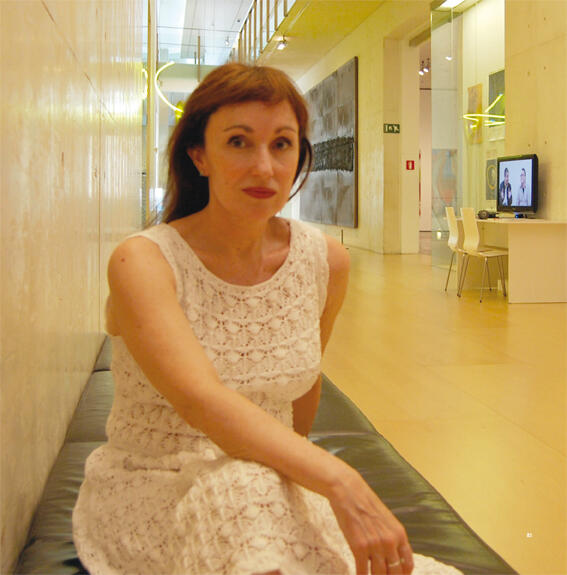
This year, the institution celebrates its tenth anniversary, guided by the commitment to feature a future program devoted to exhibitions that critically reexamine its permanent collection, as well as others that explore the evolution of artistic practices on the basis of their technical support, and very specially, a series of international exhibitions which will include fundamental Latin American artists
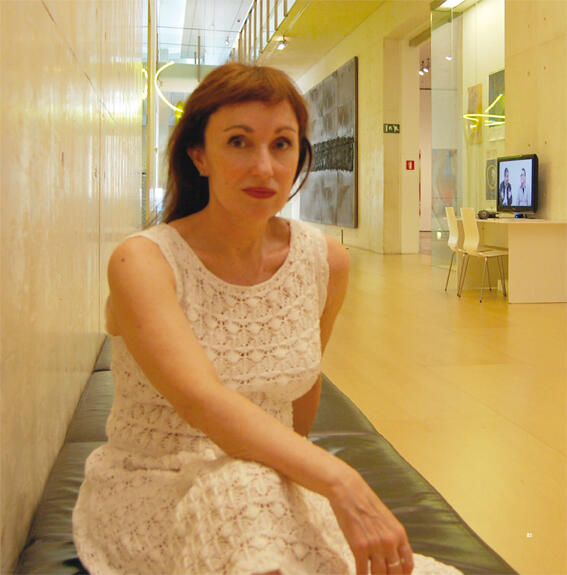
Nekane Aramburu, art historian and holder of a Master’s Degree in Museology, is Spanish – of Basque origin – and she was recently appointed Director of Es Baluard, the Museum of Modern and Contemporary Art of Palma, Majorca. The search which the institution had initiated in May of 2012 through a public call, culminated with her election by a jury of experts. The process for Aramburu’s appointment complied with the recommendations of the Code of Good Practice, which promotes transparency in the designation of public servants and privileges the skills and experience of the appointees. An exemplary protocol, which should hopefully be taken into account by those museums whose authorities depend on people holding a political office and of their remaining in office.
Nekane is a known figure in several Latin American countries – Colombia, Argentina and Uruguay, to mention just some of them – both on account of her intense activity and of the agitation she infuses in all the scenarios in which it has fallen to her lot to work. A multifaceted professional, she has imparted training, participated in forums and work sessions, collaborated with different institutions, and curated numerous exhibitions.
Sonia Becce: Ten years after its inauguration, Es Baluard, like many institutions, is faced with a different world, with political changes which sacrifice culture and have implied severe budget cuts in the sector. In this context, how do you imagine your management, which must undoubtedly be creative in terms of programs, education, and support for arts production projects?
Nekane Aramburu: I think that this economic crisis, which has had an influence on the cuts related to public cultural infrastructures, has arrived precisely at a moment when it was necessary to reconsider the approach to museum models and their development. That was, indeed, the reason why I was interested in returning to public management: to be able to reexamine the model and build it on the basis of an innovative vision, open to the real needs of creation and of contemporary thinking, making it become involved with present-day society, its agents, its audiences, and with those who were never a part of either.
SB: One of the determining reasons for your appointment was the consideration of the project and the work plan you presented. An important aspect of these is the proposal of strategies to link Es Baluard with its immediate environment, then with institutions working in similar conditions and with a similar scale, and finally, the exchange of programs and international exhibitions with, for instance, Latin America. I would like you to specify and describe these actions, and to dwell on the latter aspect.
NA: The project posited work expanding in concentric circle gradients interweaving networks transversely with peer institutions, but also with other related structures. The formulas go beyond exhibitions which may be co-productions, traveling exhibitions, or the discovery of Latin American values. I am also interested in other dissemination and production strategies other than exhibitions, such as generating a network in which formal training, research and education play a relevant role. Relationships with museums such as the Museum of Antioquía in Medellín are crucial, since we are working along the same lines. Also, to concern ourselves with building training platforms along the lines of the curatorship workshops held in Latin America, and which I have now reproduced in Les Cliniques, the training programs which are being imparted annually at Es Baluard.
SB: Do you believe there are differential aspects in Latin American artistic production that renders it attractive for you to consider including it in your programs?
NA: I am very interested in the methods and the training of creators from those countries, highly qualified people and, above all, people deeply involved with contemporary issues that go beyond the purely aesthetic. That was my line of action as a curator and a former during the previous stage, and it is the one I would like to develop now in terms of the museum’s programs, as a support bridge and an avenue for new trends, without neglecting the historical revision carried out by certain creators or collectives that are not so well known on this side of the world. And on the other hand, that of those who are included in the collection, like Alfredo Jarr, Wifredo Lam or Norah Borges, who have been barely studied.
SB: You have addressed the Es Baluard museum project with the conviction and the will to introduce a categorical change of direction, which ranges from that which may already be perceived on the outside with the recovery of very special spaces in the museum’s surroundings, through the revaluing of the task of the exhibition-hall guard-mediator as the person responsible for facilitating the public’s familiarization with art, to the core issue of the recently inaugurated exhibitions, which cover the entire exhibition space.
Your conception of exhibitions as a way of generating questions, thought and knowledge revolving around the art object and the current signification of institutional collections, in sum, questioning museum models as we know them from within, not only to update them, connecting them with the context, which is not only geographic and social, but also economic and political, is really attractive. Could you describe the curatorial axes on which you have worked in order to manifest these concerns?
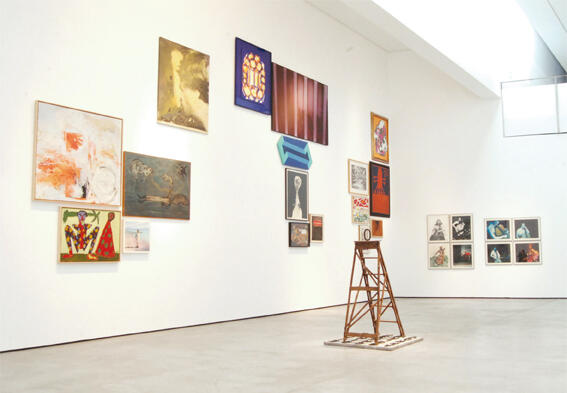
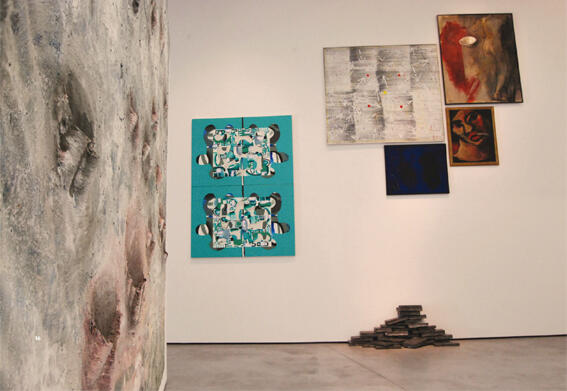
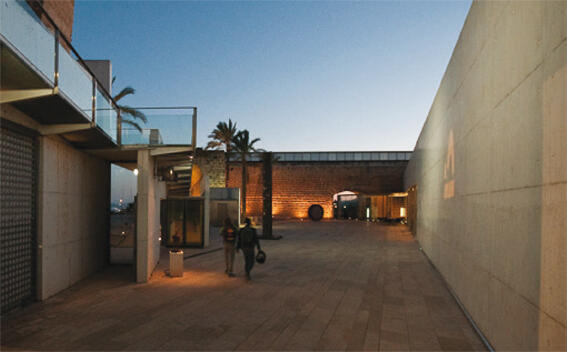
NA: The first thing has been to infuse meaning to the “white cube”, a historic space which is very beautiful on account of its architectonic and natural surroundings, but which lacked a well-defined personality. We have focused on giving meaning to the three floors of the central building hosting a permanent collection, to a floor of temporary collections oriented towards historiographic or thematic theoretical reflections, and to two exhibition halls on the upper floor, Gabinet and Observatori, which open onto the large upper rooftop-corridor. The Aljub (the Fresh Water Reservoir), connected subterraneanly to the central building, is the space devoted to international exhibitions and multidisciplinary projects. All the outdoor spaces, from the interior courtyards to the recently incorporated Moorish Tower are spaces open to associated collectives and collaborators. The basis for the museum’s programs is research of creative practices ranging from the modernist currents of the late 19th century to the contemporary ones originating in the Balearic Islands and their international projection to the north, south, east and west from the epicenter on the Mediterranean as a crossroads of cultures and ways of thinking.
SB: Will Majorcan collectors, who are very active, play a dynamic role in your museum in addition to the more traditional one of belonging to a Board of Trustees?
NA: From its strategic geographic base, the museum is a crossroads or a place of residence for many people. On the island there are people who have their primary or secondary residence, very special and very sensible people. Before my arrival, they already had a relationship with Es Baluard, for example, through the program En Privat. Now we continue working and opening new paths. In January we had a symposium on art collecting organized by the ARCO fair, and this is only the beginning. It is fundamental for the public sector to count on the collaboration of private initiatives. We are well aware of the fact that this new cycle requires adequate institutional funding, but also that we must develop mixed formulas with business firms and entities interested in becoming patrons of the contemporary patrimony and development. In this regard, Es Baluard is already becoming a reference space and a focal point.
*Sonia Becce is an independent curator. She lives and works in Buenos Aires