By
Álvaro De Benito
We spoke with Catherine Petitgas, the driving force behind the first Bienal de Yucatán, an initiative that seeks to energize the local art scene, bring contemporary art to new audiences and create a cultural ecosystem with an international outlook.
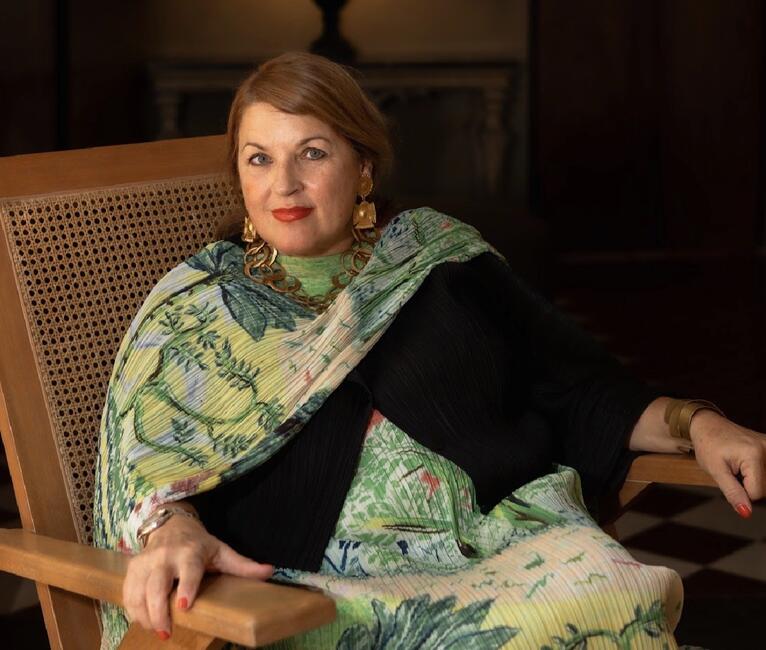
At the end of November, Mérida will host the first edition of the Bienal de Yucatán, a new event that aims to boost the region's art scene and connect it with the global contemporary art circuit. It also takes on a challenge: to develop and consolidate what will be the first international biennial held in Mexico. The project grew out of the vision and experience of collector, patron and art historian Catherine Petitgas (b. 1961), with Abraham Cruzvillegas leading the curatorial proposal and Daniela Pérez as director. Petitgas welcomed us into her home to talk about a biennial that aspires to activate the city's heritage and generate professional opportunities, while also betting on local talent, collaboration and the training of new generations, and working toward the lasting legacy of an artistic ecosystem.
Why do you think there hasn't been an international biennial in Mexico until now, and what led you to choose Yucatán for this first edition?
I couldn't tell you why there hasn't been an international biennial in Mexico until now, at least not as we understand them today. I know the Mexican art landscape well, and I find that absence hard to understand. Mexico City has one of the most advanced cultural programs of any city in the world, with a great many museums and an offering of international caliber. Guadalajara also stands out for its artistic community, as does Monterrey, where Taiyana Pimentel has managed to put MARCO back on the map. These are major cities, but I think southeastern Mexico has a particular quality: geographically, it constitutes an entity in itself, and it has been left somewhat on the margins of these developments. That's why I thought there was a clear opportunity in Mérida.
What elements of Yucatán's historical, cultural and artistic context make it a suitable place for a biennial?
There is an art school that became a university in early 2024, with very good facilities and programs, and it is helping to generate an art scene. There is also a very rich historical context, with the whole background of Maya civilization, a culture that is still very much alive in the state, where about a quarter of the people speak Maya. That cultural heritage is still very visible, and to it we must add the colonial culture and an extraordinary legacy of palaces, convents and churches, both in Mérida and outside the city. In the late nineteenth and early twentieth centuries, Yucatán went through a period of great prosperity because of henequen, which generated astonishing wealth and turned Mérida into a kind of small Paris, architecturally and urbanistically.
How can the biennial contribute to revitalizing Mérida and consolidating its art scene?
All that heritage exists, but the historic center is so vast that it has not been possible to maintain it. It is quite run-down, with problems of ownership and inheritance, and the sidewalks are also in very poor condition. All of this creates a fabulous context, because you can go on discovering spaces in the historic center, which is where a good part of the biennial will take place. At the same time, an art scene is emerging, with the school, collectives and private initiatives. There was an effervescence, if you like, but there was nothing to catalyze it, nothing that would let it be harnessed to truly create a cultural scene. That is a very long way of explaining it, but I think that's the underlying reason.
At what point did you see that a biennial could be the right format to catalyze all of this?
Until now, many of these institutions have functioned mainly as cultural centers, with limited exhibition programming. There are two or three museums, but some public institutions are perhaps museums in name only, and may not have had the resources or the ambition needed to develop a cultural offering at the level it should have. I have no intention of running a museum or telling the authorities what they should do; that is a political matter I don't want to get into. However, I believe a biennial can create a three-month art festival, capable of attracting significant international attention, but also of sparking interest in Mexico and in the city itself and helping to drive a transformation of the cultural scene.
What challenges are involved in adapting the city's exhibition spaces to host works from national and international collections?
For the moment, we are bringing in works from Mexican national collections, Mexican private collections and foreign private collections. We have had to purchase dehumidifiers, temperature monitors and portable air-conditioning units to prepare the spaces. There is also a lot of work to be done, since the walls are not in suitable condition to receive and present works at the level we have set for ourselves. These spaces have been very neglected, and we hope the biennial, without imposing a model or dictating how things should be done, will serve as inspiration to raise the standard of the institutions and the cultural offering.
You mentioned two major goals: bringing the local scene together, understanding Mérida, Yucatán and Mexico, and developing an international vision. How can two such ambitious goals be balanced in a first edition?
I've said, perhaps imprudently, that I hope we'll have between 60,000 and 70,000 visitors over the three months of the biennial, a figure that has never been reached in Mérida with a proposal of this kind. We calculated it by taking other biennials as a reference, such as those in Lyon, Mercosur and Sharjah, and I think it will be an indicator of the project's success or failure. Roughly a third of the visitors will be people from the art world, our natural audience, but we also expect to receive groups of patrons from Mexican and foreign museums, and visitors who take advantage of their attendance at fairs such as Zona Maco, Pinta Miami or Art Basel Miami Beach to travel to Mérida. We believe there could be a great deal of international interest.
Beyond that more or less captive third of the audience, how will you bring the biennial to local audiences and to communities that have traditionally felt distant from the art world?
The challenge lies, precisely, in the other two thirds of the audience: people who do not belong to the art world. That includes tourists, but above all the local population and communities that perhaps don't feel included in this field. All fifteen venues we are using are free of charge. That is extraordinary, and a gift from the public institutions. I think it is also a matter of responsibility: we are talking about taxpayers' money, the people's money. We have a duty to make culture accessible and to include those communities.
Do you have local partners who can help you bring the biennial to those audiences?
TAE (Transformación por Arte y Educación), a foundation led by Claudia Madrazo and her husband, Roberto Hernández, proposed collaborating. They support us with a mediator program of eighteen people, one for each venue, plus a rotation. Over the past twenty years they have developed a method for bringing contemporary art to people who are unfamiliar with it, working on the benefits art can bring in terms of aspirations. They are also recruiting participants through the Servicio Social program and allocating funds for transportation to bring in people from outside Mérida. They are also seeking to bring the biennial to local communities, with the support of universities and schools.
Do you think a biennial can be considered a project that has failed to meet its goals if it doesn't leave a legacy?
Some people interpret legacy as something physical and ask whether we're going to leave a sculpture or some other permanent element in the space with this first edition. Perhaps that will change later, but that conception is very far from the way we see things. For me and for the curatorial team, the legacy we want to leave lies in the people. We are training mediators who will be able to work as tour guides and make a living from it, as well as people in the field of art production. We are also involving people in production and installation. With the prosperity in the city, there is also a fairly large audience that buys art, and careers can be developed in this field. We want to help build an art ecosystem in Mérida.
What role can a biennial play in developing that artistic ecosystem and, more specifically, in projecting Mérida onto the international art circuit?
Art is also an economic sector, and it can only be sustained if people can make a living from it. For all these young people graduating from the Escuela de Arte, it is very hard to make a living from their artistic work alone. We also need good art critics and journalists. Perhaps some of the mediators will be able to develop along those lines. You asked me why a biennial rather than another format, and what appeals to me most is the ambition of creating a critical proposal that enters the level of discourse characteristic of the international biennial circuit. A proposal looking toward the future, an invitation to think beyond the everyday, even beyond art itself.
Let's delve a little deeper into the curatorial side, where Abraham Cruzvillegas is working on issues related to language, idiom and connection for this first edition. How does his proposal fit with your vision for this first edition?
I have committed to supporting and driving this initiative for three editions, in the hope that it takes root and has a future, although that will depend on the success of the first one. I decided there would be three themes: language and idiom, including concrete and visual poetry and text as art; gender and identity, from Indigenous identity to feminism, which has a very strong tradition in Mérida with the First Feminist Congress of Yucatán in 1916 and Elvia Carrillo Puerto, the first woman deputy in Mexico. The third theme will be ecosystems and water, of interest to many artists in the region and to others who have worked with it. Proposing a predetermined theme to a curator, especially when the curator is an artist, can be difficult. Nevertheless, Abraham thanked me for it, because these were subjects that fascinated him and, with only a year of preparation, they gave him a framework in which to develop the proposal.
By the way, what led you to approach Abraham Cruzvillegas to bring him on board?
First, because he adores Yucatán. He has been to the region often, partly because Mónica Manzutto and José Kuri of kurimanzutto are very close friends and spend time there. Abraham has traveled there a lot for that reason, but also for pleasure. He is half Purépecha, he is from Michoacán and has Indigenous roots, and he feels very much at home in Yucatán. Two or three years ago he took part in a research trip organized by Storefront [for Art and Architecture], and they produced a film and addressed quite a few subjects related to ecology and language. We were in a van, returning from a hacienda: Abraham, the Maya poet Pedro Uc Be, who also has a poem in the catalogue, and I. We spent an hour singing in Maya and listening to his poems, and everyone could tell Abraham loved it.
Besides his personal connection to Yucatán, what professional experience of Abraham's fully convinced you that he was the right person to lead the biennial artistically?
There are several reasons. Abraham took part in a program I launched in 2023, Project Y, aimed at supporting and professionalizing students graduating from the school through workshops, exhibitions, commissions and contact with established artists. He came twice, worked with the students and took part in some roundtables, which allowed him to get to know two generations of the school and become familiar with Yucatán's young art scene. That seemed very important to me. I was also interested in his curatorial work, in particular Historias indígenas, organized by Adriano Pedrosa at the Museu de Arte de São Paulo (MASP), in which Abraham curated the Mexico section. I saw the exhibition and it was one of the proposals I liked the most. For all these reasons, I knew Abraham could take the lead on a project, as well as serve as artistic director.
In that sense, the biennial will also make room for emerging artists and others not represented by galleries. What has it been like working with them? How different is it to work with established artists as opposed to artists who are not yet part of that industry?
I think Abraham has a rather youthful spirit, and that is part of his charm. It also makes working with him and his team very pleasant. What struck me was watching him work with the young people from the university. There are several 22-year-old artists in the biennial, just imagine. Abraham is demanding, but young people that age, especially those who are always on social media, adore him.
What is it about Abraham's way of working that connects so well with young artists?
His way of working has three principles, as he himself puts it: working with what is at hand, in an improvised way and collaboratively. He has conveyed that very well to the young people. His way of doing things, with found objects and many references to Situationism and 1980s conceptual art, remains appealing to young people. We invited ten artists recently graduated from the university and three collectives to a meeting, with the idea that they would talk about their vision for the biennial, that Abraham would explain what needed to be done, and so on. All they wanted was workshops and for Abraham to see their proposals, which would help them structure them. I think that is very important, because he has a career of more than thirty years, and seeing that he is still so relevant has been very moving for me.
As project director you have Daniela Pérez, who has experience at institutions such as Museo Tamayo and has worked on biennials. What did her background bring to the direction of this project, considering you have only had a year to prepare it?
Daniela has two other qualities that made her perfect, and it has been enormous luck to have her in Mérida. For personal reasons, she decided to move there with her family several years ago. She lived in Brazil for several years and also worked on one of the Mercosur biennials, so she had experience with biennials. As you say, she spent about eight years at Museo Tamayo, where she organized several international-level exhibitions. That, and the fact that the museum's programming is of very high quality, meant she understood perfectly what we were trying to do. I had already worked with Daniela and I'm very close to TAE, so while she was there, we tried to get things done and to define how the foundation's role could also develop.
I believe there have also been other projects shared with Daniela, or ones that caught your attention, that made you trust her to drive the biennial…
Gerda Gruber is an Austrian sculptor based in Mérida, who was one of the teachers at the Escuela de Arte and a professor at San Carlos, and who had been forgotten. Daniela pushed me to organize an exhibition with her at one of the cultural centers that will be a venue for the biennial, which brought her back to the foreground. Taiyana Pimentel, director of MARCO in Monterrey, then invited her to exhibit at the museum, and the show also traveled to the Museo de Arte Moderno in Mexico City, coinciding with the fiftieth anniversary of her first exhibition in Mexico. Daniela was the curator and I was very involved in the project. So when the idea of the biennial began, there was no doubt that Daniela had to do it.
Conceiving a biennial is exciting, but it must be acknowledged that the time you've had to work on it has not been the longest. What has it been like preparing the biennial in such a short time?
It has been an enormous, very intense project. There hasn't been a weekend without work, and over the summer we were all somewhat on the verge of burnout, although we kept going. Now we are very enthusiastic and excited, but also exhausted. It has been difficult and a learning experience, because we've had to do everything in a year. I am a board member of the Liverpool Biennial and sit on its Finance and Human Resources committees. I thought I knew how a biennial works, but this experience has shown me everything it involves. It has been an enormous challenge, but we are giving our best and I'm confident everything will go very well.
The I Bienal de Yucatán will take place from November 26, 2026, to February 28, 2027, at the Casa de la Cultura del Mayab and at fourteen other venues in Mérida (Mexico).
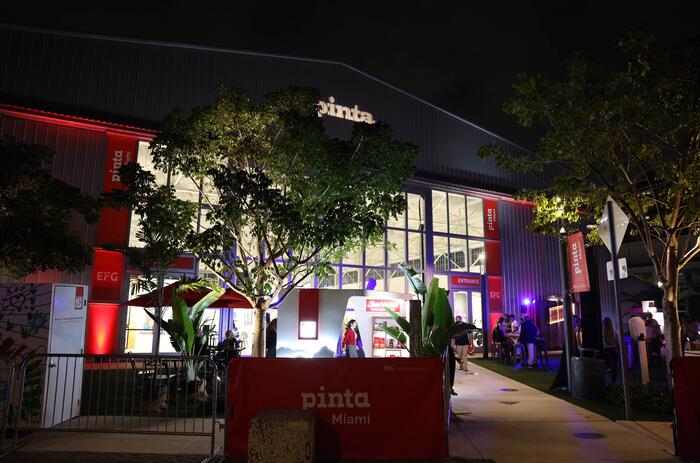
From December 3 to 6, The Hangar, in Coconut Grove, will host an edition that includes a Main Section curated by Irene Gelfman and a program of conversations.